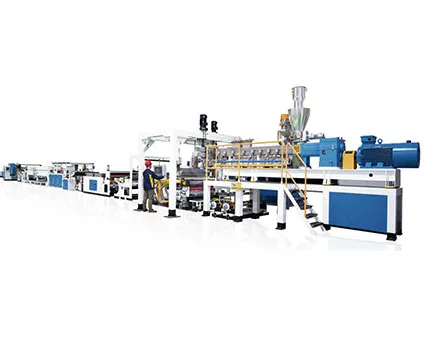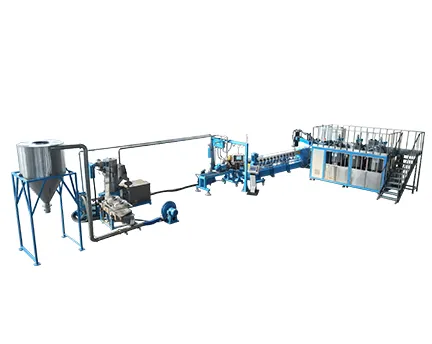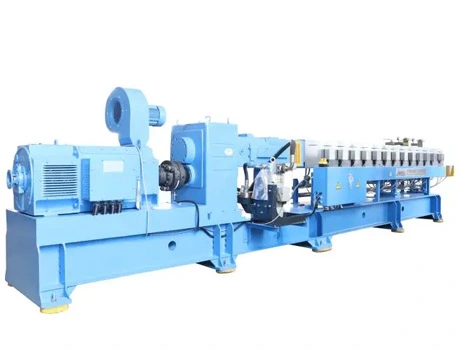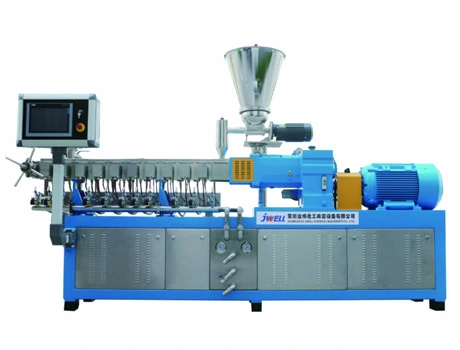


The JWELL twin screw extruder series, including the CJWS, CJWH, CJWV, CJWS Plus, and CJWS Plus Pro models, spans multiple models from standard compounding to ultra-high torque output, serving petrochemical, modification, high-filled, and recycling applications. Built around modular screws, self-wiping geometry, and precise thermal control, the system balances throughput with operational stability.
High Torque & High Speed — Torque grades 9–16. Higher throughput and better dispersion in a single pass.
Modular Screw Design — Building-block design, flexible configuration for different material systems.
Self-Wiping & Quick Changeover — Co-rotating intermeshing design. Fast color and material changeover, minimal downtime.
Wide Material Compatibility — Polyolefins, engineering plastics, high-filled compounds, biodegradable materials, TPU reaction extrusion, recycling streams, and more.
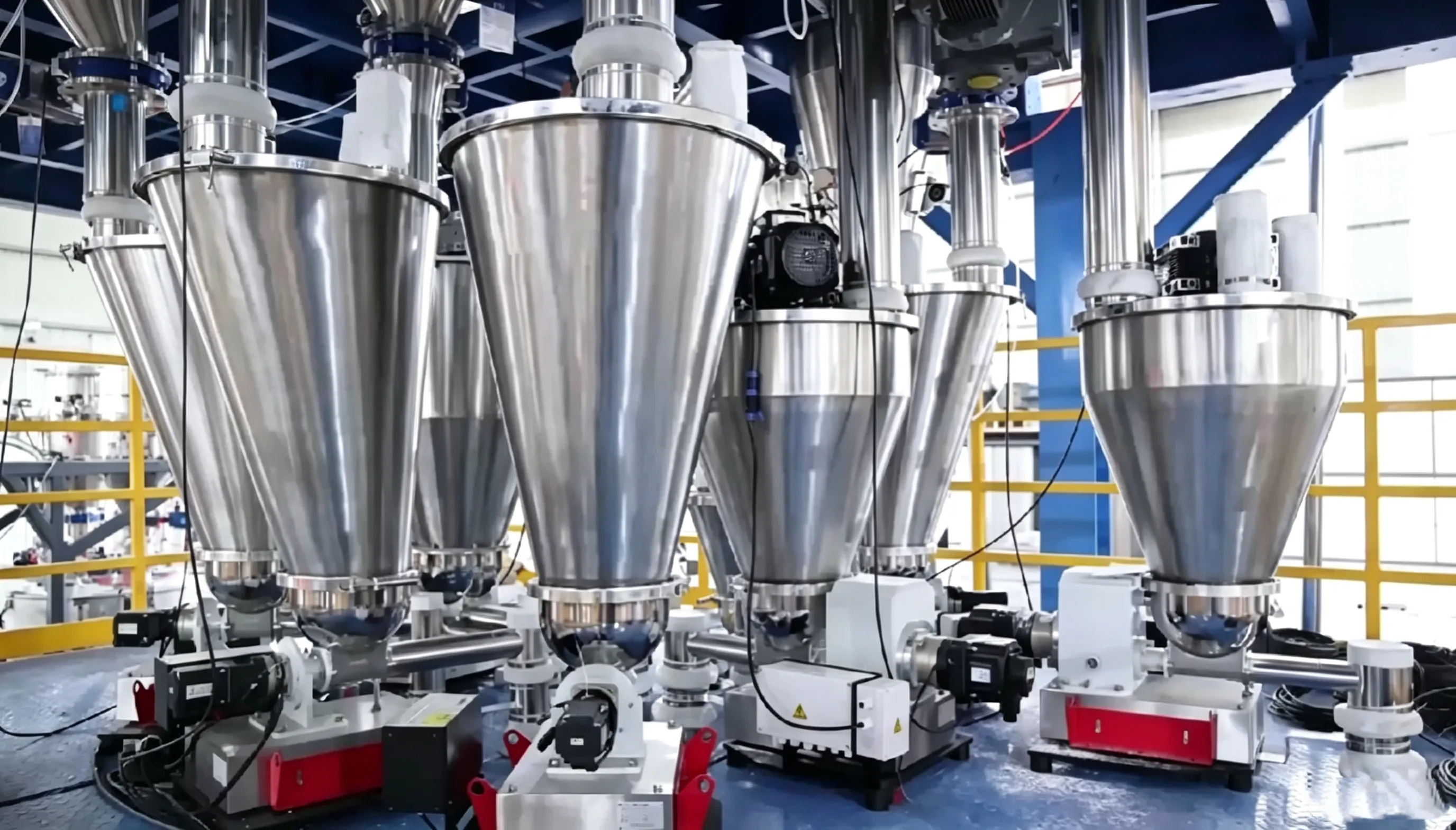
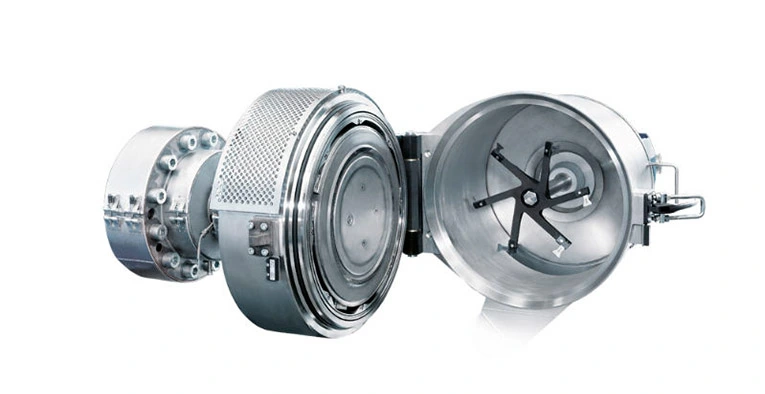
Precision & Automation — CNC machining + HIP wear-resistant materials. Integrated feeding, pelletizing, and real-time monitoring.
Energy Efficient — Permanent magnet motors + German gearboxes. Heating bands save up to 50% energy.
Turnkey Service — One-stop support from testing to commissioning. 25+ years experience, global service network.
Five configurations for different applications:
CJWS Twin Screw Extruder
Designed for petrochemical pelletizing, engineering plastics modification, filling compounding, and biodegradable materials.

CJWH Twin Screw Extruder
Built for high-intensity modification of engineering plastics (PA, PPA, PBT) and highly filled systems (glass fiber/talc reinforcement).

CJWV Twin Screw Extruder
Specifically designed for highly filled masterbatches (inorganic filler content up to 70-80%) and recycling pelletizing.

CJWS Plus Twin Screw Extruder
Ideal for TPE/TPV/TPU, HFFR compounds, PVC modification, and color masterbatches.

CJWS Plus Pro Twin Screw Extruder
Designed for high-end TPV dynamic vulcanization, one-step extrusion forming, and medical/food-grade specialty compounding.

1200kg/h CJWS75 Twin Screw Extruder — White&Filler Masterbatch — Egypt, 2026
1500 kg/h CJWH Twin Screw Extruder — TPE — Russia, 2026
CJWV40 Twin Screw Extruder — High-filler Black Masterbatch — Saudi Arabia,2026
1100 kg/h CJWS75 Plus Twin Screw Extruder — Biodegradable Pelletizing — China,2026
1300~1600 kg/h CJWS135&CJWS95Plus Pro Twin Screw Extruder — EPE photovoltaic film — China,2026
1. Group-Backed Excellence, 20+ Years of Expertise
25+ years of extrusion expertise since 1997. 3,000+ employees, 9 manufacturing bases, 500+ technical engineers.
2. 1,016+ Patents & Vertical Integration
Inheriting the Group's "Jinhai Screw" core craftsmanship, we independently develop and manufacture key twin-screw extruder components—screws, barrels, and shafts—with patented technologies like the split-type barrel for reliable long-term operation.
3. Global Installations in 50+ Countries
Operating in 50+ countries with local offices across Europe, Middle East, SE Asia, and the Americas, we provide full-cycle support from installation to after-sales, helping global customers scale overseas production.
4. Strategic Partnerships & Certifications
• Acquired Kautex — renowned German extrusion brand
• Joint laboratory with SABIC for advanced material R&D
• ISO-certified manufacturing
• 2,000+ advanced extrusion lines delivered worldwide
5. Complete Turnkey Service
Raw material testing → line customization → factory layout → installation & commissioning → operator training → after-sales support. Thailand manufacturing base for faster APAC/MEA delivery.

Q1: What materials can JWELL twin screw extruders process?
Polyolefins, engineering plastics, high-filled compounds, biodegradable materials, TPU, PVC, TPE/TPV, masterbatches, and recycling streams.
Q2: Which series should I choose?
CJWH for standard compounding, CJWV for high-filling, CJWS for high-torque engineering plastics, CJWS Plus/Pro for ultra-high torque and maximum output. Contact us for tailored advice.
Q3: What is the output capacity?
Depending on model and material. Contact us for material-specific calculations.
Q4: What is torque grade and why does it matter?
Torque grade (9–13.5) indicates torque per unit volume. Higher torque = higher output, better dispersion, and processing of more viscous or highly filled materials.
Q5: Do you provide installation and training?
Yes. Full turnkey service: installation, commissioning, operator training, and after-sales support. Global service network in 50+ countries.