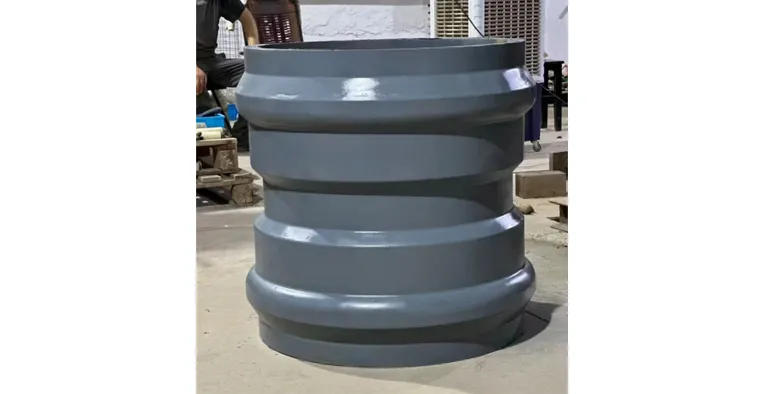
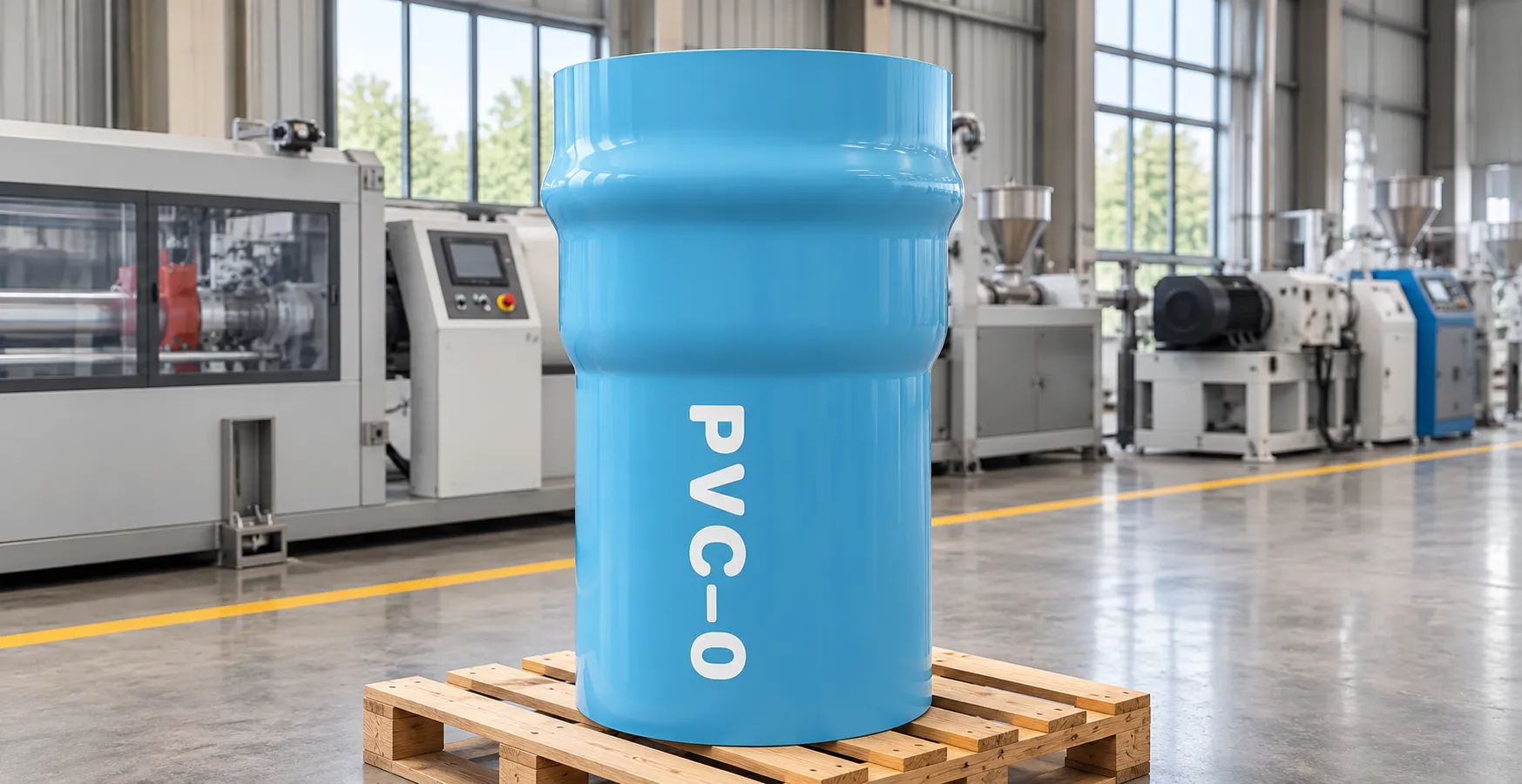
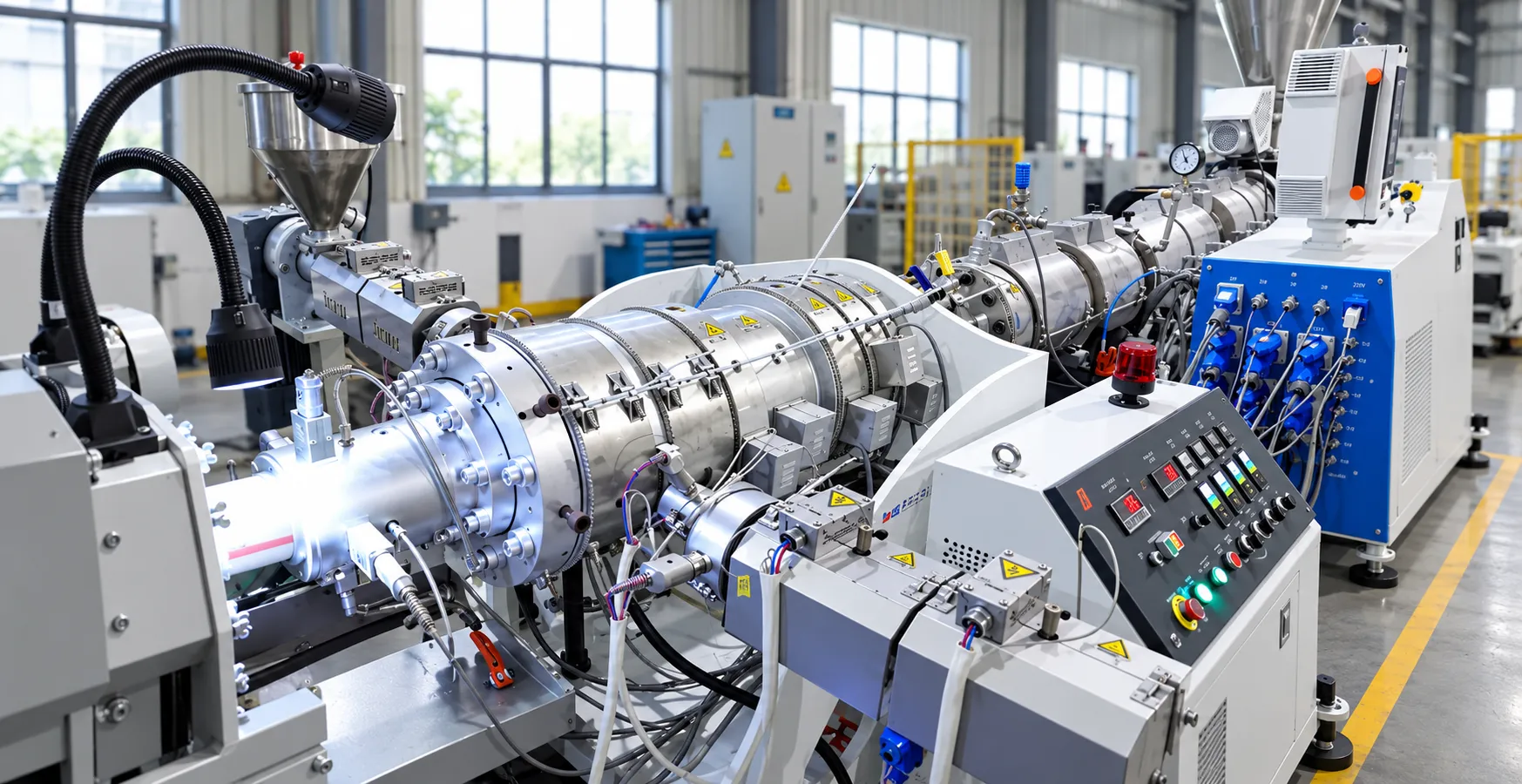
Biaxially oriented polyvinyl chloride (PVC-O) pipes are manufactured through a special orientation processing process, which involves axial and radial stretching of PVC-U pipes produced by extrusion.
The PVC long chain molecules in the pipes are arranged in a regular manner in the biaxial direction, resulting in a new type of PVC pipe with high strength, high toughness, high impact resistance, and fatigue resistance. Its performance is far superior to ordinary PVC-U pipes. The research and development of PVC-O pipes can greatly save raw material resources, reduce costs, improve product performance, and have significant economic and social benefits.
| Diameter Range (mm) | Extruder Model | Main Motor Power (kW) | Output (kg/h) | Production Method |
| Φ90–250 | SJP78-33 | 45 | 300 | One-step Process |
| Φ110–315 | SJP93-37 | 79 | 450 | One-step Process |
| Φ160–400 | SJP93-37 | 79 | 500 | One-step Process |
| Φ315–630 | SJP114-37 | 118 | 800 | One-step / Two-step Process |
| Φ450–800 | SJP114-37 | 118 | 900 | Two-step Process |
| Φ630–1000 | SJP135-37 | 173 | 1,200 | Two-step Process |
| Φ800–1200 | SJP135-37 | 173 | 1,450 | Two-step Process |
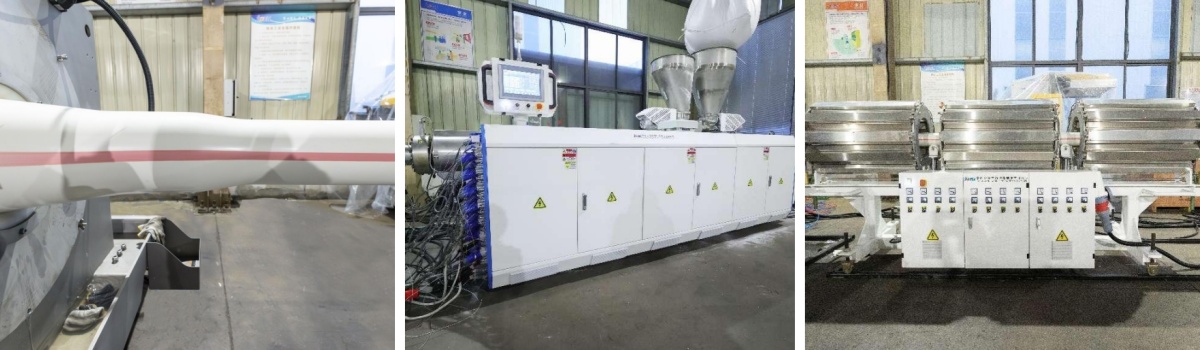
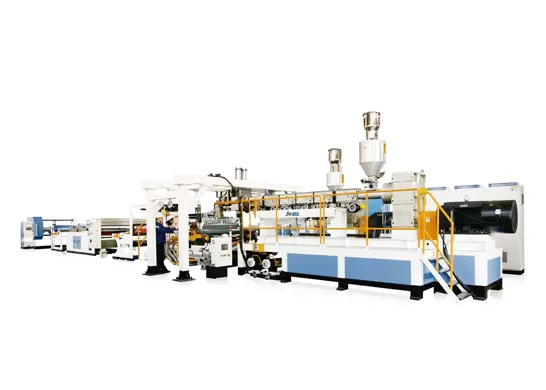
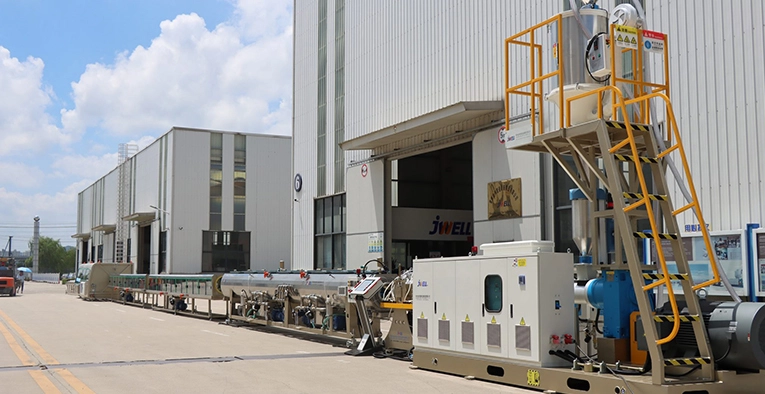
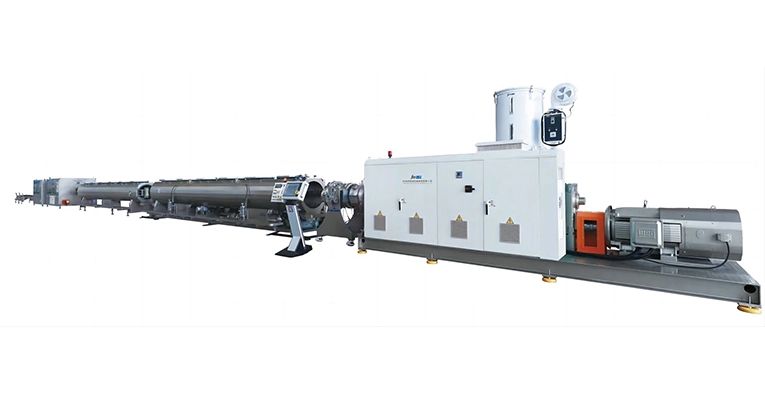
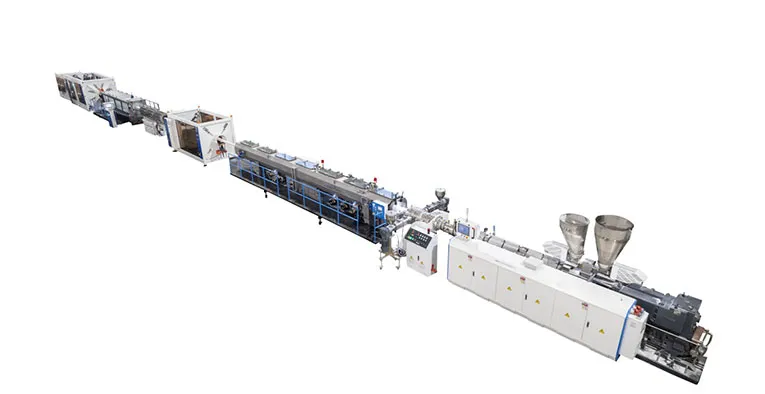
JWELL PVC-O pipe extrusion machines are available with one-step and two-step production methods. The appropriate process mainly depends on the required pipe diameter, production capacity and factory configuration.
In the In-Line process, extrusion and molecular orientation are integrated into a continuous production system. This configuration reduces intermediate handling and provides a compact production workflow.
JWELL currently offers one-step In-Line configurations for pipe ranges including Φ90–250 mm, Φ110–315 mm and Φ160–400 mm. The Φ315–630 mm configuration can be supplied with either a one-step or two-step process.
In the Off-Line process, the PVC precursor pipe is first extruded and then transferred to a separate orientation stage. This method is particularly suitable for larger pipe diameter production and gives manufacturers flexibility in arranging extrusion and orientation operations.
JWELL Off-Line process PVC-O pipe production lines are available for larger diameter ranges including Φ450–800 mm, Φ630–1000 mm and Φ800–1200 mm. When selecting between the two processes, customers should consider target pipe diameter, required output, available factory space and existing production equipment.
JWELL has supplied PVC-O pipe extrusion equipment for international pipe manufacturing projects. One recent example is the 2025 Brazil PVC-O 90–400 mm Pipe Extrusion Line Project, covering PVC-O pipe production within the 90–400 mm diameter range. For customers planning a new PVC-O pipe factory or upgrading an existing PVC pipe production line, actual project references can help evaluate equipment configuration, production layout and commissioning requirements.
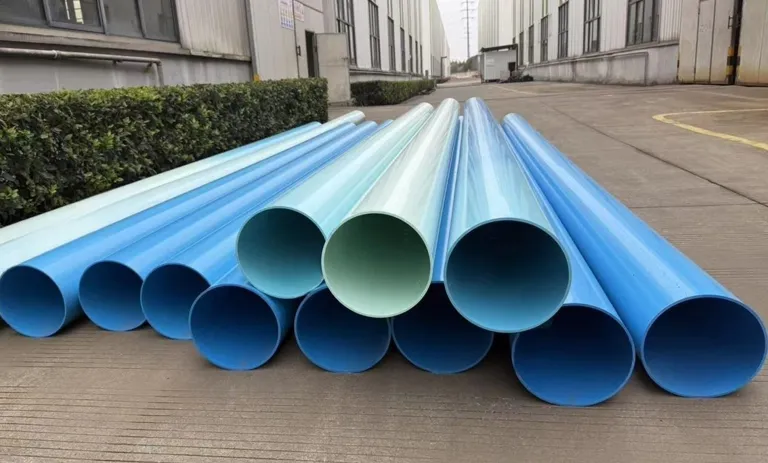
A PVC-O pipe extrusion line from the leading pvc pipe extrusion line manufacturer is a production system used to manufacture oriented polyvinyl chloride pipes. It combines PVC extrusion with a molecular orientation process that stretches the pipe in the circumferential and axial directions to create the oriented PVC-O structure.
PVC-U pipe is normally formed through conventional extrusion, calibration and cooling. PVC-O production adds a controlled molecular orientation stage after the precursor pipe is formed. This additional process changes the molecular structure of the pipe and improves its mechanical performance.
According to the current JWELL configurations, PVC-O pipe extrusion lines cover diameter ranges from Φ90 mm to Φ1200 mm, depending on the selected extruder and production method.
JWELL currently offers configurations with rated outputs from approximately 300 kg/h to 1450 kg/h. Actual production capacity depends on the pipe specification, material formulation and process conditions.
Customers should provide the required pipe diameter range, wall thickness, pressure class, applicable standard, target output, raw material formulation and available factory conditions. These details help determine the appropriate extruder and complete production line configuration.
Yes. The production line configuration can be adapted according to pipe specifications, required capacity, production method, factory layout and other project requirements. Final equipment parameters should be confirmed during technical consultation.