PC/ABS compounds are used when processors need a balance between polycarbonate performance and the processing characteristics of ABS. If the PC-to-ABS ratio drifts during feeding, the finished pellets may no longer match the intended heat resistance, impact behavior, flow, surface quality, or molding window. Ratio control is therefore a production-control task, not only a formulation task.
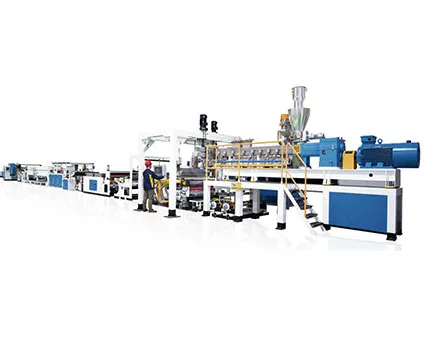
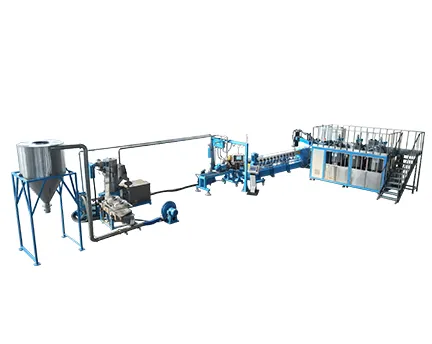
In engineering-plastic compounding, the approved recipe must be converted into stable mass flow and then homogenized in the extruder. JWELL twin screw extruder systems are used for continuous polymer compounding, where feeding accuracy and mixing quality must work together.
PC and ABS contribute different characteristics to a blend, so changing the composition changes both material properties and processability. Shimadzu's evaluation of PC/ABS blending ratio also notes that the blend ratio affects material characteristics and that an incorrect ratio can contribute to molding defects.
A reliable PC/ABS recipe should be controlled as mass flow. If a formulation requires defined percentages of PC and ABS, each feeder should deliver the corresponding kilograms per hour at the selected line output. Volumetric speed alone can be misleading because pellet size, bulk density, refill behavior, and hopper conditions can change the amount delivered per revolution.
Gravimetric feeding provides a clearer link between recipe percentage and actual throughput. When total line output changes, both polymer feeds can scale together while the approved blend ratio remains constant.
Ratio drift often begins upstream of the screws. Typical checks include feeder calibration, refill events, material bridging, inconsistent pellet flow, regrind variation, conveying interruptions, and changes in bulk density. Even a short interruption in one feed stream can create off-ratio material while the extruder itself appears to run steadily.
A co-rotating twin-screw extruder is well suited to polymer blending because it can combine melting, distributive mixing, dispersive mixing, venting, and homogenization in a continuous process. JWELL's Engineering Plastics Compounding Machine is the most directly related commercial page for this type of application.
However, good mixing cannot repair a wrong recipe. If the feeders supply too much PC or too much ABS, the screws can homogenize the wrong ratio very effectively. Feed accuracy and mixing quality must therefore be controlled as separate but connected variables.
Confirm the approved PC/ABS formulation, including modifiers, fillers, colorants, or regrind.
Convert each recipe percentage into target mass flow at the required total throughput.
Calibrate the PC and ABS feeders with the actual production materials.
Check refill and conveying behavior for short-term overfeeding or underfeeding.
Trend actual feeder output against the target setpoint.
After a grade change, allow enough residence time for the previous formulation to clear before judging the new pellets.
When a line produces several PC/ABS grades, the transition between recipes is the highest-risk period for off-ratio material. The new formulation should be loaded as one coordinated recipe rather than by changing several feeders independently. Record the recipe-change time, feeder trends, extruder load, melt pressure, pellet appearance, and the point at which downstream checks confirm the new grade.
If a compound falls outside its expected performance window, start with the recipe history before changing screw speed or barrel temperature. Compare target versus actual feeder totals, calibration results, refill events, regrind additions, raw-material lots, drying conditions, melt pressure, and pellet appearance. If the feed ratio is correct, then investigate melting, screw configuration, mixing intensity, venting, filtration, and pelletizing.
No. The required ratio depends on the target application and grade specification. More PC changes the property balance and processing behavior; it is not automatically better for every product.
No. The extruder mixes the materials supplied to it. Accurate upstream metering is still required to ensure that the correct ratio reaches the screws.
Start with actual feeder output, calibration, refill events, material flow, bulk-density changes, conveying stability, and regrind additions.
PC/ABS blend control is strongest when formulation, gravimetric feeding, material handling, twin-screw mixing, and quality verification are treated as one process. JWELL's twin-screw extruder platform provides the equipment context for engineering-plastic compounding, while the final feeder configuration and recipe-control strategy should be matched to the customer's material system and product requirements.