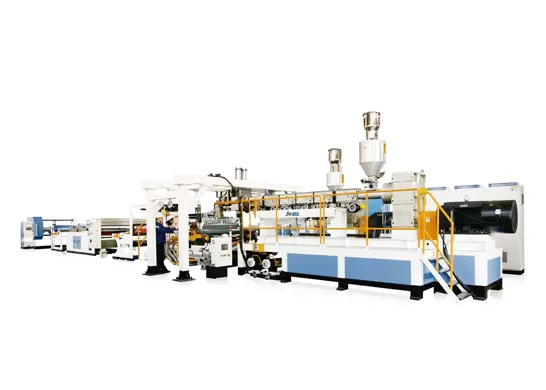
Plastic sheet extruder, also known as plastic film forming processing equipment, is a type of plastic processing machinery. The main function of the plastic sheet extruder is to mix plastic fragments or granules of different components in certain proportions, process them through a series of procedures, and eventually form products in the form of plastic sheets or films, which can then be reprocessed into various types of shaped plastic products. As a common plastic machinery equipment, the plastic sheet extruder may encounter various faults during daily operations, affecting the normal production of plastic machinery. Below are the causes and treatment methods for the faults of the plastic sheet extruder:
Poor bearing lubrication.
Severe bearing wear.
Check and add lubricant.
Check motor bearings and replace if necessary.
Uneven speed of the main motor.
Uneven speed of the feeding motor, causing fluctuation in feeding quantity.
Check the main motor control system and bearings.
Check the feeding system motor and control system.
The pressure setting of the lubrication oil system's pressure regulating valve is too low.
Oil pump failure or clogged oil suction pipe.
Check and adjust the lubrication oil system pressure regulating valve.
Check the oil pump and oil suction pipe.
Low air pressure or oil pressure.
Air cylinder (or hydraulic station) air leak (or oil leak).
Check the power system of the screen changer device.
Check the sealing condition of the air cylinder or hydraulic cylinder.
Excessive torque in the extrusion system.
Misalignment between the main motor and the input bearing.
Check if metal or other objects have entered the extrusion system, jamming the screw. At the initial occurrence, check if the preheating and heating time or temperature meet the requirements.
Adjust the main motor.
Fault in feeding system or no material in the hopper.
Hard object entering the extrusion system, jamming the screw, preventing material from passing through.
Check the feeding system or material level in the hopper.
Check and clean the extrusion system.