Plastic sheet extrusion is widely used in automotive parts, appliances, sanitaryware, luggage, packaging, and advertising products. Among different thermoplastics, ABS is valued for its impact resistance, dimensional stability, surface quality, and thermoforming performance.
Choosing the right abs sheet extrusion machine requires more than comparing extruder output. Manufacturers need to consider the complete production line, including material feeding, melting, flat-die extrusion, cooling, trimming, cutting, stacking, and automation.
JWELL Machinery provides sheet extrusion solutions for ABS and various other thermoplastic materials, making it an option for manufacturers looking for integrated extrusion technology.
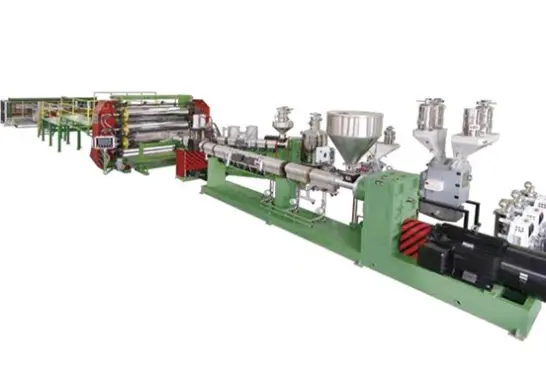
A sheet extruder machine continuously converts plastic resin into flat sheets with controlled thickness and width. Plastic pellets are fed into an extruder, where heat and screw shear melt and homogenize the material.
The molten polymer is then pushed through a flat die. The hot sheet passes through cooling and calibration rolls before trimming, cutting, conveying, or stacking.
Sheet extrusion is closely connected with thermoforming because extruded sheets can be reheated and formed into three-dimensional products. The Society of Plastics Engineers provides technical information on sheet extrusion systems used for thermoforming applications.
ABS or ABS/HIPS material enters the extruder through a controlled feeding system. The screw and barrel gradually heat and plasticize the polymer.
Stable feeding and temperature control are essential for maintaining consistent output and avoiding variations in sheet quality.
After melting, the polymer must be thoroughly homogenized before entering the flat die. Die design, melt pressure, and temperature stability directly influence sheet thickness and surface quality.
The extruded sheet passes through cooling rolls to stabilize its dimensions and surface. Line speed, roll temperature, and cooling conditions must be properly coordinated.
SPE research has examined how extrusion parameters can influence sheet properties for subsequent thermoforming.
After cooling, edge trimming establishes the required sheet width. The finished sheets can then be cut and automatically stacked, reducing manual handling and improving production consistency.
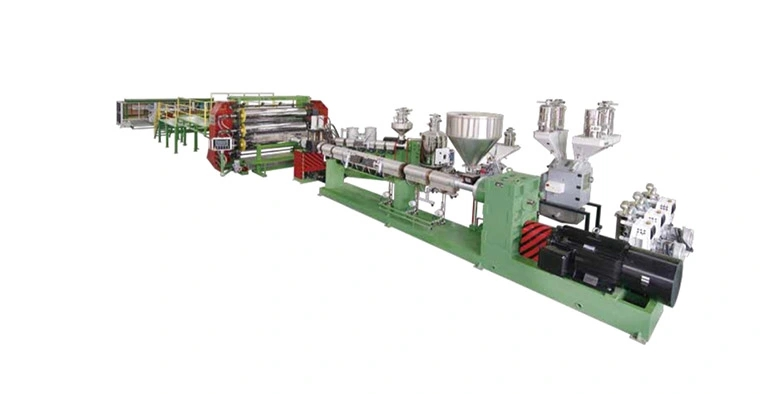
ABS combines toughness, impact resistance, dimensional stability, and good surface characteristics. These properties make it suitable for products that require both mechanical performance and attractive appearance. Plastics Engineering – Inside Materials: ABS
provides an overview of ABS properties and applications.
JWELL's ABS Sheet Extrusion Line is designed for ABS and ABS/HIPS sheet production. The listed applications include refrigerator boards, sanitaryware plates, advertising boards, baggage plates, and automotive plates.
For manufacturers producing extruded ABS sheets, applicable standards should also be considered. ISO 15015:2025 specifies requirements and test methods for certain solid flat extruded ABS, AEPDS, and ASA sheets.
The required sheet extrusion equipment depends on the final product.
Application | Key Requirements |
Refrigerator parts | Uniform thickness and surface quality |
Sanitaryware | Thermoforming stability |
Automotive parts | Impact resistance and dimensional stability |
Luggage panels | Toughness and attractive appearance |
Advertising boards | Flatness and surface finish |
According to JWELL's published specifications, its ABS sheet extrusion solutions include JW160, JW130, and JW120 models. Listed product widths are 2,000 mm, 1,800 mm, and 1,220 mm, with a thickness range of 1–6 mm. Depending on the model, listed capacity reaches up to 1,500 kg/h.
When comparing extrusion line manufacturers, consider the following factors.
Choose equipment according to required output, operating hours, sheet width, thickness, and material. A larger machine is not necessarily more economical if its capacity significantly exceeds production needs.
The extruder, flat die, cooling rolls, and downstream equipment must match the required sheet dimensions. Thickness accuracy is particularly important for thermoforming applications.
Different polymers require different processing conditions. JWELL's sheet extrusion and thermoforming material solutions cover ABS, PP, PS, PET, HDPE, TPU, TPO, PLA, PVC, PC, PMMA, acrylic, and other materials.
Automatic feeding, stacking, conveying, and centralized control can improve production efficiency. Buyers should also consider energy consumption, component accessibility, spare parts, and technical support.
A reliable extrusion line factory should be able to provide installation, commissioning, maintenance guidance, and after-sales support.
JWELL extrusion machinery covers multiple plastic-processing categories, including sheet extrusion, pipe extrusion, profile extrusion, compounding, and recycling.
Its sheet extrusion solutions cover a wide range of materials and applications. This can be useful for manufacturers that need to produce different types of plastic sheets or plan to expand their product portfolio.
JWELL also publishes project information, including ABS sheet extrusion projects. Such project experience can help buyers compare an extrusion line manufacturer based on practical applications as well as machine specifications.
Extrusion thermoforming involves two connected manufacturing stages. First, the extrusion line produces a flat sheet with controlled thickness and surface quality. The sheet is then heated and formed into a three-dimensional product.
The quality of the extruded sheet can directly affect thermoforming results. Thickness distribution, heating behavior, shrinkage, and material properties all influence the final product.
For this reason, manufacturers should evaluate the extrusion process together with downstream thermoforming requirements instead of treating the two processes completely separately.
ABS is not the only material used for sheet production. A PE sheet extrusion line can produce polyethylene sheets for waterproofing, industrial applications, thermoforming, and other uses.
JWELL's sheet extrusion and thermoforming portfolio includes PE and HDPE-related solutions as well as ABS, PP, PS, PET, TPU, and other materials.
When selecting PE equipment, manufacturers should consider resin type, sheet width, thickness, output, surface requirements, and downstream processing.
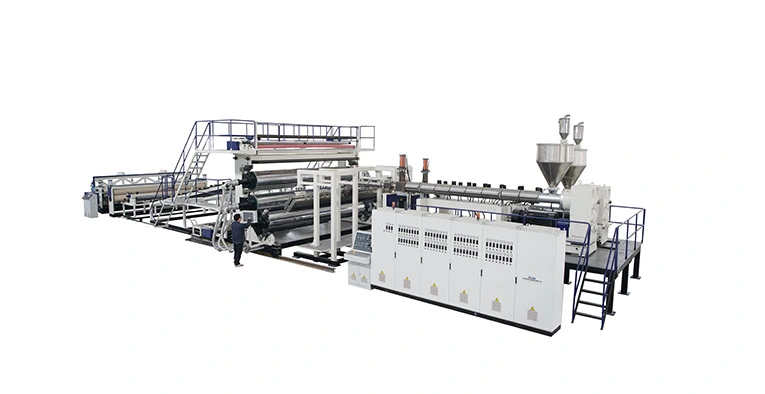
An abs sheet extrusion machine produces continuous ABS or ABS/HIPS sheets for refrigerator components, sanitaryware, luggage, automotive parts, advertising boards, and other thermoformed products.
A sheet extruder handles melting and extrusion, while a complete line includes the extruder, flat die, cooling system, trimming, conveying, cutting, stacking, and auxiliary equipment.
JWELL's published ABS sheet extrusion line information lists a thickness range of 1–6 mm, depending on the model and configuration.
Some lines can process multiple materials, but polymer properties differ. Screw configuration, die design, temperature settings, and downstream equipment may need to be adapted.
Uniform thickness and stable material properties help provide predictable heating and forming behavior, improving the consistency of finished thermoformed products.
Evaluate production capacity, material compatibility, sheet dimensions, automation, project experience, technical support, spare parts, and the supplier's ability to provide a complete production solution.
Selecting the right abs sheet extrusion machine requires evaluating the entire production system rather than focusing only on output capacity. Feeding, melting, die extrusion, cooling, trimming, automation, and downstream thermoforming requirements all influence the final result.
For manufacturers comparing extrusion line manufacturers(https://www.jwell-machinery.com/), JWELL offers a broad portfolio covering ABS, PE, PP, PS, PET, HDPE, TPU, TPO, PLA, PVC, PC, PMMA, and other materials.
By matching machine configuration with material, sheet dimensions, production capacity, and final application, manufacturers can build a more stable and efficient sheet extrusion process.