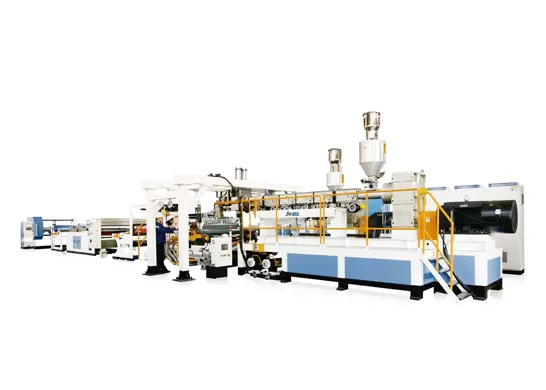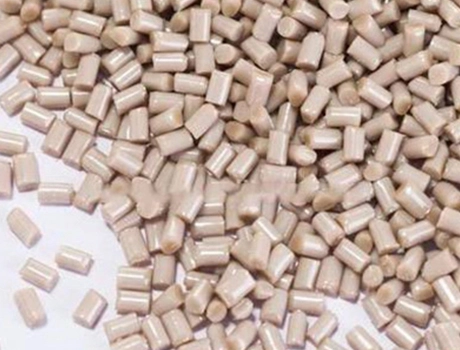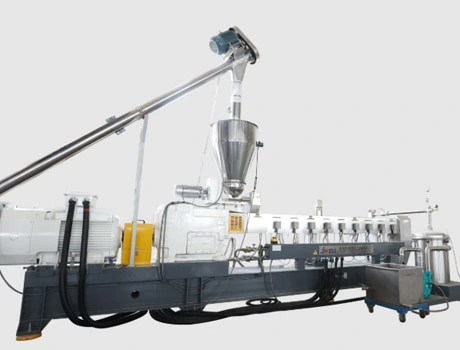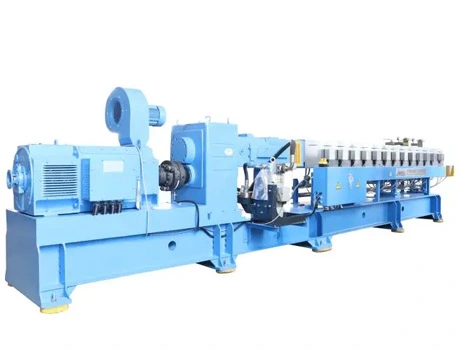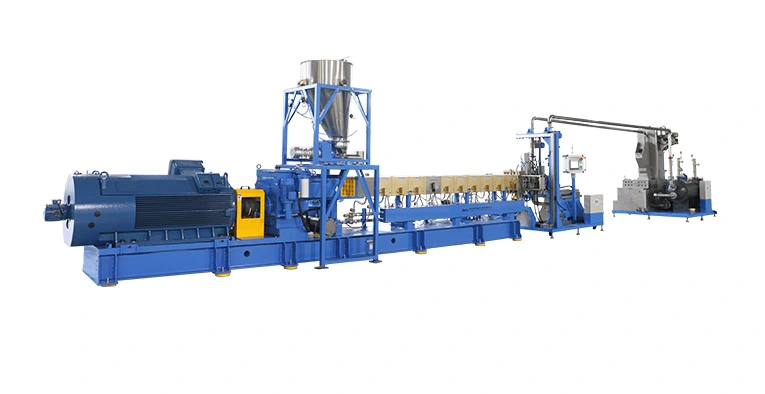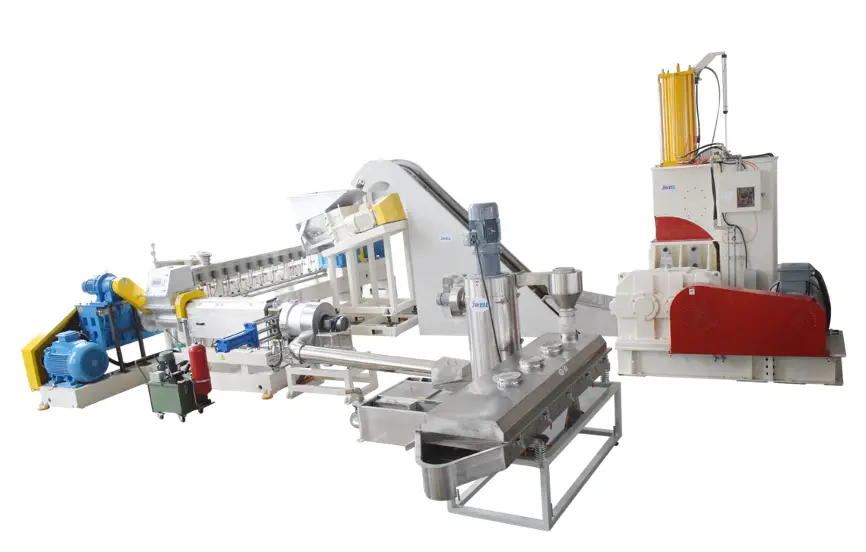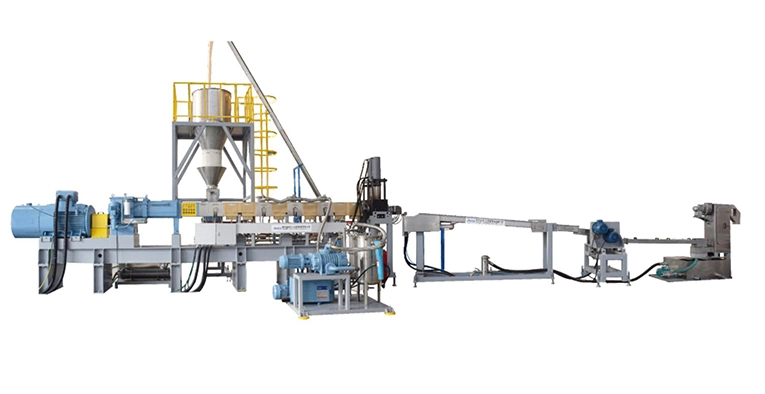


Plastic compounding is a process for adding fillers and additives materials into a molten plastic base to produce a material with desired qualities. Additives and modifiers may result in plastic with a particular color, texture, strength, and so on. One of the main application fields for JWELL twin screw extruders is compounding. The excellent incorporation characteristics for additives, filling and reinforcing materials creates products that are used in many fields.
Engineering plastics is main application in twin screw compounding filed, which can be used for polymer coloring, filling and blending, and also other mechanics.
JWELL Machinery has extensive process experience and know-how to customize all process steps from raw material metering feeding, conveying, melting, dispersion, homogenization, devolatilization, pressure building, to filtration and pelletizing according to your masterbatch formulation requirements. Everything you need: the perfect compounding and extrusion system tailored to your needs.
Compounding is a process in which the polymer is melted and mixed with e.g. additives,fillers or reinforcing materials.This process changes the physical,thermal, electrical ot aesthetic properties(conductivity,flame resistance, wear resistance,color etc.) of the polymer. The final product is called a compound.
Typical compounding tasks include:
o Reinforcing polymers-(Glass Fiber,Carbon Fiber,Natural Fiber)
o Modification of thermoplastics to achieve high-impact resistance
o Improving the dimensional stability and compression strength of polymer (Inorganic fillers, glass beads filling)
o Improvement of flow,mold release,and flame-retardant behavior of polymers(Blended with low viscosity components, flame retardants, etc)
o Production of polymers blends ( Blending with compatible/incompatible polymers)
o Coloring polymers(-Mixed with pigment, masterbatch and dye)
o Improvement of chemical/physical stability of polymers (Mixed with stabilizer and antistatic agent)
In applications where parameters such as breaking strength or impact resistance are relevant, the polymer is reinforced with fibers. Glass fibers are used predominantly, but other fibers can also enable linkage with polymer carrier substances such as carbon and natural fibers. This addition and linkage of the fibers to the polymer chains produces materials with high break and impact resistance, which also convince with their low weight.