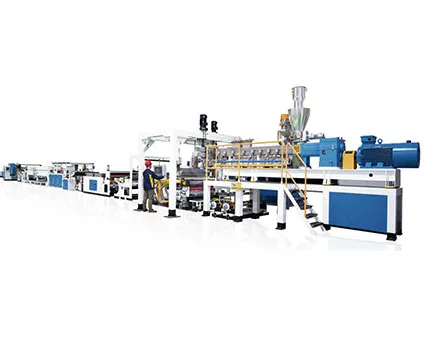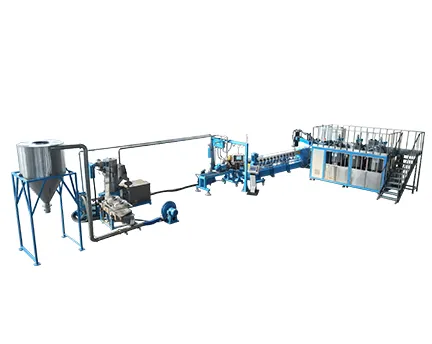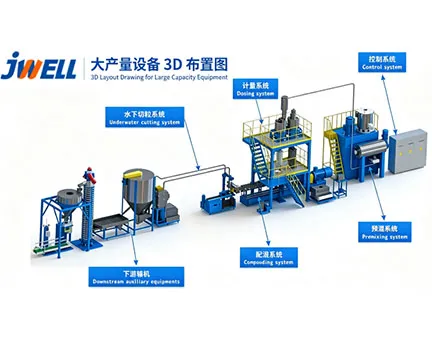
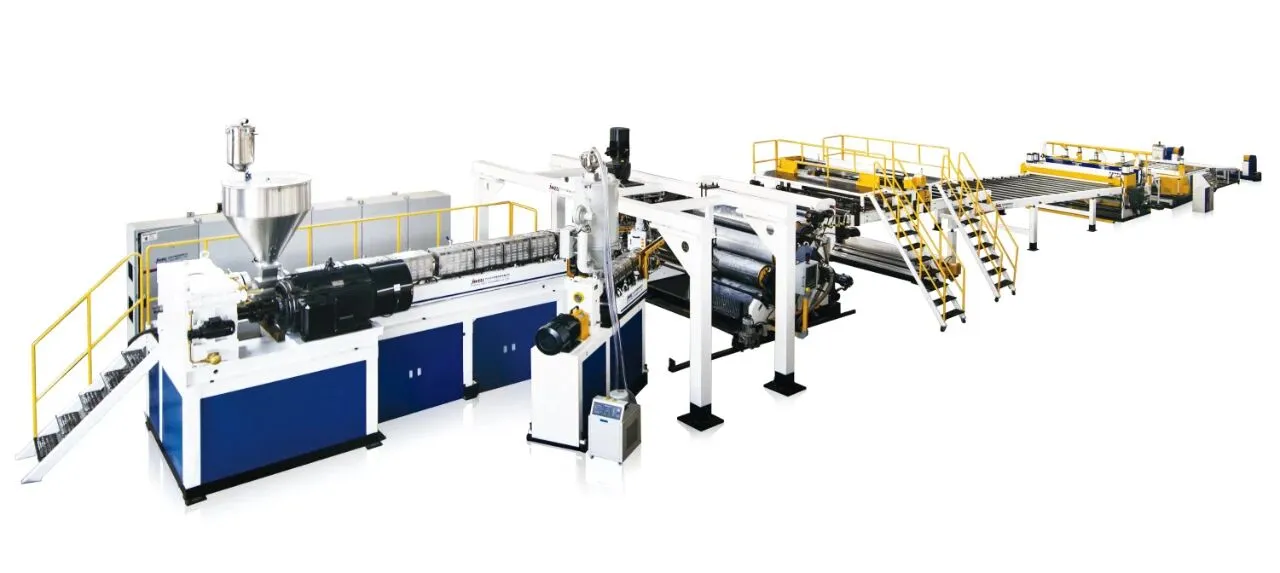
A standard sheet extruder machine is generally designed around stable output, dimensional accuracy and reliable sheet forming. An optical-grade PC or PMMA line has a more demanding objective: it must minimize process variations that can affect transparency, haze, surface appearance and light transmission. This article examines how optical-grade PC and PMMA sheet lines differ from standard extrusion lines, what that means for screw design, melt delivery, T-die precision and calendering, and what buyers should evaluate when sourcing from plastic sheet extrusion machine manufacturers.
This distinction is particularly important for PC and PMMA. Both materials can be used for transparent sheets, but optical applications place much tighter demands on material purity and processing consistency. Covestro's optical-grade polycarbonate information distinguishes optical grades from standard grades and highlights applications requiring high transparency and controlled optical properties.
JWELL separates PC Sheet Extrusion Lines and PMMA PC Optic Sheet Extrusion Lines within its sheet extrusion portfolio, indicating that these applications require more specialized configurations than a general-purpose sheetextrusion machine.
A conventional sheet extruder is usually evaluated according to output, sheet width, thickness range, dimensional stability and downstream application.
For many industrial or packaging sheets, the priority is to produce consistent material efficiently. Optical sheet production adds another layer of requirements. Small inclusions, surface defects, flow marks or variations in optical properties can become significant when the sheet is used for lighting, displays, lenses or light-guiding components.
For example, Covestro's High Optical Quality guide explains that optical applications can require high material purity because impurities and surface defects may become particularly problematic in applications involving high transmittance and homogeneous light distribution.
This changes the design philosophy of the entire sheet extrusion equipment package.
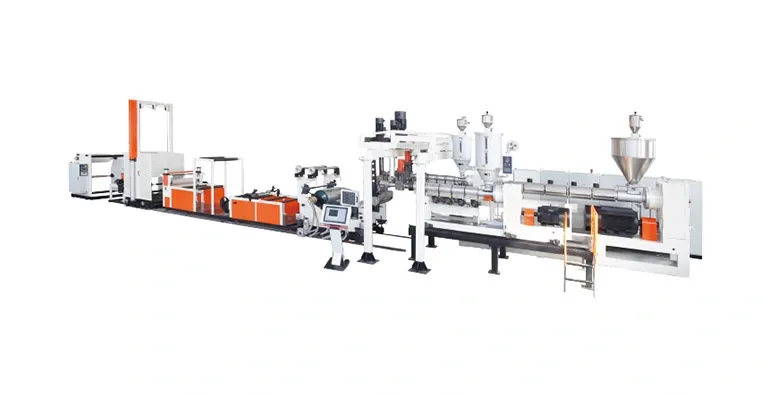
The screw configuration is one of the first areas where an optical line differs from a general-purpose extrusion system.
A standard sheet extrusion machinery setup can prioritize efficient melting and high throughput. An optical-grade system has to balance plasticization with melt uniformity and controlled processing conditions.
JWELL states that its PMMA/PC optical sheet extrusion line uses a specially designed screw based on the rheological characteristics of the raw materials. This is important because PC and PMMA do not necessarily behave like conventional PE or PP sheet materials during processing.
Therefore, simply choosing a larger sheet extruder machine is not necessarily the best solution. The screw geometry should correspond to the target resin, viscosity and product requirements.
In a standard extrusion line, the extruder normally provides the required melt pressure for the die.
For optical sheet, more stable melt delivery can become a key design consideration. JWELL's PMMA/PC optical configuration incorporates a precision melt pump between the extrusion section and forming system. According to the manufacturer's product information, the melt pump helps provide stable and uniform melt extrusion.
Why does this matter?
Pressure fluctuations can influence melt flow through the die. In an ordinary sheet, a small variation may be manageable. In an optical sheet, variations in thickness or flow distribution can affect visual uniformity.
The melt pump therefore serves as a precision-control component rather than simply an output device.
The T-die determines how the molten polymer is distributed across the sheet width.
For a conventional sheet line machine, the die needs to deliver a stable melt curtain and maintain the required thickness profile. For optical-grade products, the requirements become more demanding because uneven flow can contribute to thickness variation and optical inconsistency.
JWELL combines a precision melt pump with a T-die in its PMMA/PC optical sheet configuration.
This is an important distinction when comparing a generalsheet extruder company with a supplier experienced in specialized optical extrusion. Buyers should evaluate the complete melt-delivery system rather than judging the extruder only by motor power or maximum output.
After the melt exits the die, the sheet enters the cooling and calendering section.
In conventional sheet production, this section primarily controls thickness, flatness, cooling and surface finish. Optical-grade production requires even greater attention to roll temperature, alignment, pressure and surface condition.
JWELL describes its optical line as using a precision calender system to help guarantee the mechanical and physical properties of the finished sheet.
The importance of this stage can also be understood from PMMA's end-use requirements. Röhm's PLEXIGLAS® optical application information highlights the importance of high transparency and light-guiding properties in demanding lighting applications.
Consequently, an optical sheet extrusion machineneeds a downstream system capable of maintaining the surface quality established during extrusion.
Although PC and PMMA are both associated with transparent sheet applications, they should not be treated as identical materials.
PC combines transparency with high toughness and is available in grades specifically developed for extrusion. For example, Covestro's Makrolon® ET3113 product information identifies the material as suitable for extrusion, solid sheet and corrugated sheet applications.
PMMA, meanwhile, is particularly valued for transparency and light transmission. Röhm's PLEXIGLAS® application information describes PMMA as offering excellent light transmission and light-guiding properties.
This means an optical extrusion line should be configured according to the specific resin and product target rather than assuming one setting will suit every transparent polymer.
The differences discussed throughout this article can be consolidated into a side-by-side comparison. The table below summarizes the engineering priorities of a standard sheet extrusion line versus an optical-grade PC/PMMA sheet extrusion machine across nine critical dimensions — from screw configuration and melt control to surface defect tolerance and final quality focus. Use it as a quick reference when evaluating a sheet extruder company's optical capability.
| Feature | Standard Sheet Extrusion | Optical-Grade PC/PMMA |
|---|---|---|
| Primary objective | Stable output and dimensions | Optical quality plus dimensional stability |
| Screw | General-purpose or material-specific | Precisely adapted to PC/PMMA rheology |
| Melt control | Conventional pressure control | Higher pressure stability |
| Melt pump | Application dependent | Important for precision melt delivery |
| T-die | Standard flat-sheet forming | Higher flow-distribution precision |
| Calender | Cooling and thickness control | Precision cooling and surface control |
| Material purity | Application dependent | Critical |
| Surface defects | Tolerance depends on application | Much less tolerance |
| Quality focus | Thickness, width, flatness | Transparency, haze, surface and optical uniformity |
When evaluating plastic sheet extrusion machine manufacturers, buyers should look beyond the extruder itself.
The supplier should explain why the screw design is appropriate for the selected PC or PMMA grade.
A precision melt pump can be valuable when stable pressure and flow are important to the product specification.
The die should provide controlled melt distribution across the entire sheet width.
Roll temperature, alignment and surface condition should be considered part of the optical production process.
The machine should be selected according to required thickness, width, output and optical performance rather than simply maximum production capacity.
JWELL's sheet extrusion portfolio includes dedicated solutions for PC and PMMA optical sheets alongside conventional PP, PS, PET, ABS, HDPE and PVC sheet systems.
Its published PMMA/PC optical sheet solution incorporates a material-specific screw, precision melt pump, T-die and precision calendering system.
This configuration is fundamentally different from selecting a generic PE sheetextrusion line simply according to throughput. The target application determines the level of process precision required.
The biggest difference is the level of process precision. Optical lines place greater emphasis on melt stability, material purity, die flow, calendering and surface quality.
It can stabilize melt delivery between the extruder and T-die, helping reduce pressure fluctuations and supporting more consistent sheet formation.
No. Both can be extruded into transparent sheets, but their rheological and processing characteristics differ. Screw design and process parameters should therefore be matched to the material grade.
Ask about the screw design, melt pump, T-die, calendering system, target thickness and width, output range, compatible resin grades and quality-control capabilities.
The main difference between an optical-grade PC/PMMA line and a standard extrusion line is not simply machine size or output. It is the level of control applied throughout the melt-delivery and sheet-forming process.
For optical products, screw design, melt-pressure stability, T-die precision and calendering accuracy work together to reduce variations that could affect transparency, surface quality and optical uniformity.
For manufacturers looking for a sheet extruder machine, the right approach is therefore to match the complete extrusion system to the required optical performance rather than selecting equipment based only on capacity.
[1] Covestro – High Optical Quality: Polycarbonate for Optical Applications.
[2] Röhm – PLEXIGLAS® Optical Quality in Zumtobel TECTON Luminaire System.
[3] Covestro – Makrolon® ET3113 Product Information (Extrusion-grade PC).
[4] Röhm – PLEXIGLAS® Optical Application in Artemide Ameluna Luminaire.
Continue exploring the JWELL sheet extrusion portfolio with these related guides and product references.
• ABS Plate Extrusion Machine: A Guide to Plate Extrusion Equipment and Thermoforming
• Common Problems and Solutions for Plastic Sheet Extruder
• What Is Plastic Extrusion Technology?
• PMMA / PC Optical Sheet Extrusion Line (JWELL Product Page)
• PC Sheet Extrusion Line (JWELL Product Page)
This article is prepared by the JWELL sheet extrusion engineering content team, drawing on JWELL’s published product specifications for PC, PMMA, PVC, PET, PE and TPO sheet extrusion lines, plus third-party industry references including ASTM standards, PETCORE Europe technical procedures, Covestro and Röhm material documentation, and Teknor Apex processing guides. Specifications cited (width, thickness, capacity, screw type) reflect JWELL’s published configurations at the time of writing and may vary with specific project requirements.
Last updated: September 2026
Reviewed by: JWELL Sheet Extrusion Engineering Team
Primary sources cited: JWELL product pages (jwell-machinery.com), ASTM International store.astm.org, PETCORE Europe technical library, Covestro Solutions Center, Röhm PMMA application resources, Teknor Apex technical library.