Ultra-high molecular weight polyethylene (UHMWPE) fibers generally refer to fibers spun from UHMWPE resins with a molecular weight of 1,000,000 to 5,000,000. As the third generation of high-performance fibers following carbon fibers and aramid fibers, UHMWPE fibers are white in appearance and currently rank the highest in the world in terms of specific strength and specific modulus, boasting excellent impact resistance, wear resistance, low temperature resistance, and corrosion resistance.
UHMWPE fibers can be processed into unidirectional (UD) fabrics for military equipment such as bulletproof vests and bulletproof helmets; into covered yarns for cut-resistant gloves, marine and industrial cables; into composite yarns for fishing lines and fishing nets; and into textile fabrics for bed sheets, garments, and other daily necessities. In addition, their applications are expanding in the aerospace, sports equipment, and robotics fields.

Figure 1 Applications of Ultra-High Molecular Weight Polyethylene Fibers
Nevertheless, the defects of UHMWPE fibers cannot be ignored: (1) The UHMWPE macromolecular chains contain no active groups, and feature regular molecular arrangement, compact structure, and high crystallinity, leading to poor dyeability and low color fastness of the fibers. At present, most commercial products are white UHMWPE fibers, which fail to meet the market's diverse color demands; (2) The intermolecular forces of UHMWPE fibers are weak, making interchain slippage prone to occur under long-term stress, thus precluding their application in long-term stress environments; (3) UHMWPE fibers have a relatively low melting point, with a maximum service temperature ranging from 80 ℃ to 100 ℃, and a limiting oxygen index (LOI) of only 17.5%, rendering them flammable and restricting their use in some high-temperature operating environments; (4) The tensile strength of UHMWPE fibers needs further improvement, as there remains a significant gap between their actual tensile strength and theoretical strength.
This article mainly introduces the current preparation technologies and related modification methods of UHMWPE fibers, and summarizes the main research directions of differentiated fibers.
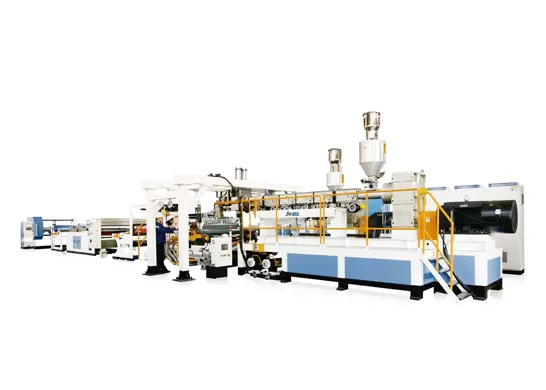
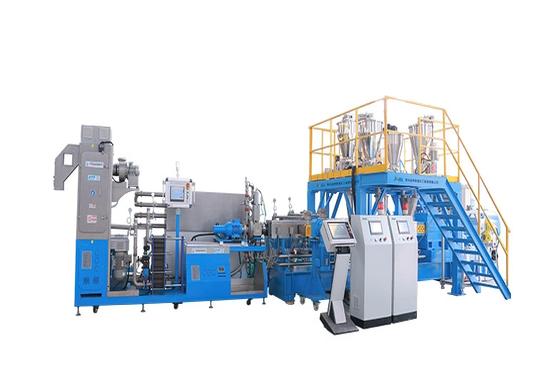
The preparation technologies of UHMWPE fibers mainly include plasticized melt spinning, solid extrusion, ultra-stretching or local stretching, surface crystallization growth, and gel spinning. Among these, only gel spinning has been industrialized on a large scale, also known as the gel spinning-ultra-stretching method. In this process, a twin screw extruder for compounding is often utilized to ensure that the UHMWPE resin powder and solvents are mixed into a uniform dope. The raw materials include UHMWPE resin powder, solvents, and spinning additives such as antioxidants. Currently, the molecular weight of UHMWPE resins used in industrial gel spinning is generally 3,500,000 to 6,000,000, and the common concentration of spinning dope is 7% to 10%.
Due to the long, flexible macromolecular chains of UHMWPE, chain entanglement is highly likely to occur. Dissolving UHMWPE in a certain solvent can increase the distance between macromolecules through the dilution effect of the solvent. After the dope is extruded into fibers, gel nascent fibers with an appropriate number of macromolecular entanglement points are obtained. Finally, UHMWPE fibers with extended-chain structure are produced through ultra-stretching and molecular orientation under heat. The key processes of this technology include spinning dope preparation, gel fiber formation, solvent removal from gel fibers, and multi-stage ultra-stretching of dry gel fibers under heat.
Based on the type of solvent used, gel spinning can be divided into dry and wet processes. The two processes are basically the same in terms of spinning dope preparation and multi-stage stretching, with the biggest differences lying in the solvents adopted and the subsequent solvent removal processes.
Represented by DSM of the Netherlands, the dry process uses high-volatility solvents such as decalin. The typical process flow is: spinning dope preparation → spinning → purging for solvent removal → multi-stage ultra-stretching under heat. After the uniformly dissolved UHMWPE spinning dope is extruded through spinneret orifices, it passes through one or more long thermal flues, where the solvent in the dope stream is gradually volatilized into the hot air or inert gas flowing in the flues, and the dope is cooled and solidified into dry gel nascent fibers.
This process enables direct solvent recovery without the need for a solvent extraction system, featuring a short process flow, economic efficiency, and environmental friendliness, as well as high spinning speed and continuous production capacity. The fibers produced have the advantages of a smooth surface, few defects, high crystallinity, high fiber density, high melting point, and low solvent residue. However, decalin is relatively expensive, flammable, and explosive, imposing higher requirements on production equipment.
In the early 1980s, DSM of the Netherlands and Toyobo of Japan first industrialized the dry spinning process, with the product named Dyneema. In 2008, Sinopec Yizheng Chemical Fibre established China's first dry spinning production line in China.
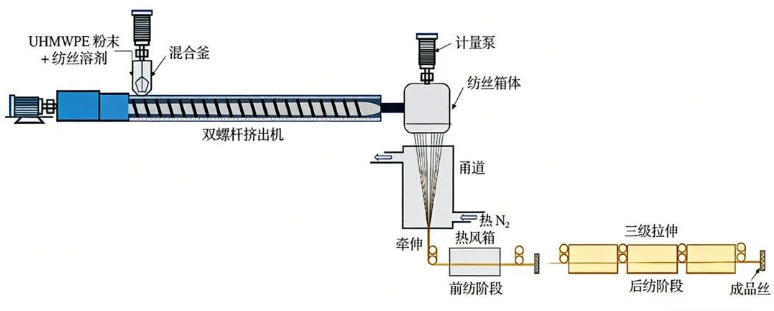
Figure 2 Dry Spinning Process Flow of UHMWPE Fibers
Represented by Honeywell of the United States, the wet process uses high-boiling and non-volatile solvents such as paraffin oil (white oil, mineral oil, kerosene, etc.). The typical process flow is: spinning dope preparation → spinning → coagulation bath → phase separation (fiber storage barrel) → pre-stretching → extraction → drying → multi-stage ultra-stretching under heat.
The UHMWPE spinning dope is extruded through spinneret orifices and enters a coagulation bath for rapid cooling to form nascent gel fibers. Generally, the nascent gel fibers are placed in a fiber storage barrel for 24 to 48 hours for sufficient phase separation, followed by extraction and drying to obtain dry gel fibers. This process requires an additional extraction system to remove the spinning solvent, resulting in a longer process flow.
Common extractants include carbon gas cleaning agents, haloalkanes, xylene, etc., and the process can be further divided into gel fiber break and dry fiber break processes. The gel fiber break process allows bundle stretching, suitable for large and small batch production, with relatively simple operation and good safety. Its disadvantages include an additional production step of fiber bundle barreling, increased floor space due to fiber storage barrels, easy fiber bundle edge collapse and tangling during barreling and barrel moving, generation of a certain number of head and tail fibers between each barrel, excessive oil contamination on the ground and poor sanitary conditions.
The dry fiber break process enables continuous and automated production, eliminating the barreling step, thus saving space and improving sanitation. Compared with the gel fiber break process, it produces fibers with uniform fineness, fewer hairy fibers and breakages, but the absence of gel fiber barreling increases the load on the extraction unit.
Overall, the wet process produces fibers with high strength and thicker monofilaments, featuring low solvent cost, high safety and relatively simple and mature technology, thus becoming the mainstream process for fiber enterprises at home and abroad. However, this process is generally discontinuous, requiring extraction, drying and other procedures, resulting in a complex production flow and indirect solvent recovery. In 1988, Honeywell of the United States commercialized the wet spinning process with the product named Spectra, and the industrialization of wet spinning was first realized in China in 1999.

Figure 3 Wet Spinning Process Flow of UHMWPE Fibers
Melt spinning is a method that involves heating and melting polymer pellets, extruding them to form nascent fibers, and then performing multi-stage stretching to produce finished fibers. It has obvious advantages such as a simple process, high production efficiency, low energy consumption, and low environmental pollution. However, the high molecular weight of UHMWPE raw materials leads to high viscosity and poor fluidity of the spinning melt during melting, increasing the difficulty of melt spinning. Therefore, strict control of process parameters such as spinning temperature, pressure, and stretching speed is required. Although progress has been made in the melt spinning technology of UHMWPE fibers, researchers often use a laboratory twin screw extruder to optimize the process parameters, and green and environmentally friendly melt spinning is expected to become a future research direction.
Table Comparison of Dry and Wet Gel Spinning Processes
Index | Dry Process | Wet Process |
Typical Process Flow | Spinning dope preparation → spinning → purging for solvent removal → multi-stage ultra-stretching under heat | Spinning dope preparation → spinning → coagulation bath → phase separation (fiber storage barrel) → pre-stretching → extraction → drying → multi-stage ultra-stretching under heat |
Spinning Solvent | High-volatility solvents (decalin, etc.) | Low-volatility solvents (white oil, paraffin oil, etc.) |
Solvent Removal | Purge with hot inert gas | Static phase separation + extraction + drying |
Advantages | Direct solvent recovery without extractants; short production process; continuous production with high speed; produced fibers have a smooth surface, few defects, good flexibility, high crystallinity, high density, high melting point, narrow melting range, low solvent residue, and superior product quality | High fiber strength and thicker monofilaments; relatively low technical difficulty and equipment requirements |
Disadvantages | Decalin is expensive, flammable and explosive; higher requirements for production equipment | Generally discontinuous production with complex flow due to extraction and drying; indirect solvent recovery |
Representative Manufacturers | DSM (Netherlands), Sinopec Yizheng Chemical Fibre, etc. | Honeywell (US), etc. |
The low melting point, surface chemical inertness, and weak interfacial adhesion of UHMWPE fibers limit their potential applications. To address these defects, existing plastic extrusion technology and modification methods—often developed by a professional compounding machine manufacturer—mainly include chemical crosslinking, radiation modification, plasma treatment, corona discharge, blending modification, and surface coating.
Chemical crosslinking modification can be divided into peroxide crosslinking and coupling agent crosslinking based on the type of crosslinking agent used. Peroxide crosslinking modifies UHMWPE fibers with peroxides, which generate a large number of free radicals in UHMWPE, and the free radicals couple with each other to cause crosslinking. Coupling agent crosslinking mainly adopts silane coupling agents such as vinyl siloxane and propenyl siloxane.
Radiation modification initiates the grafting of monomers on the fiber surface through radiation sources such as γ-rays, microwaves, ultraviolet rays, and electron beams. It improves the surface chemical inertness of UHMWPE fibers, thereby enhancing the bonding performance between fibers and resins.
Plasma treatment generates plasma by ionizing gas, which etches the fiber surface to increase its roughness and simultaneously introduces polar groups such as hydroxyl and carboxyl groups, significantly improving the surface free energy and bonding performance of the fibers.
In the corona discharge method, fibers are placed in a high-frequency voltage field, and a strong electric field is generated between the two poles of the corona discharge device, which causes dielectric breakdown of the gas medium and produces corona discharge. The generated plasma or ozone can react with the fiber surface, making it carry polar functional groups such as carboxyl and carbonyl groups, increasing the surface roughness and thus enhancing the adhesion between fibers and resins.
Blending modification refers to the physical mixing of inorganic or organic modifiers with UHMWPE to form a new material system with macroscopic uniformity and microscopic phase separation.
Surface coating forms a functional film on the fiber surface through physical adhesion or chemical reaction to improve the physicochemical properties of the fiber surface. For example, UHMWPE fibers coated with silver nanoparticles exhibit excellent antibacterial properties.