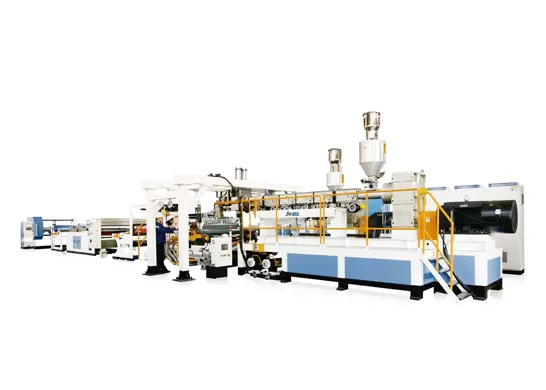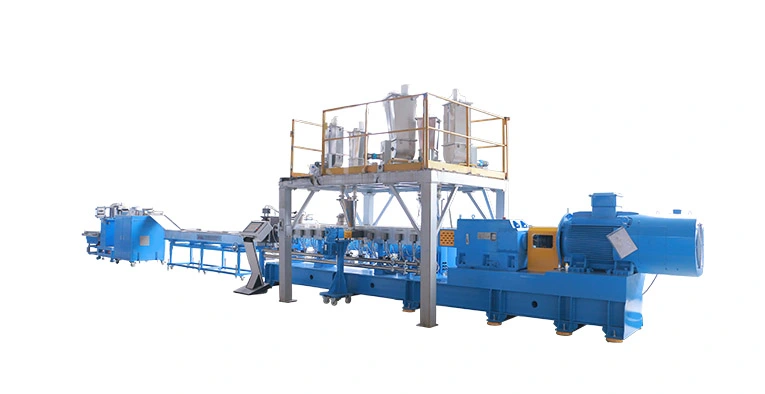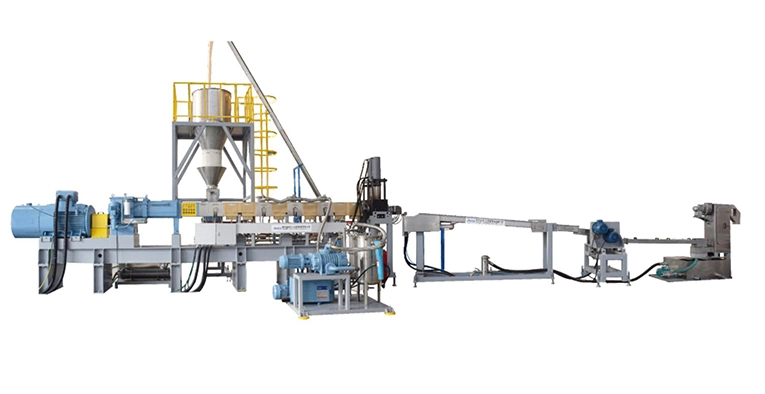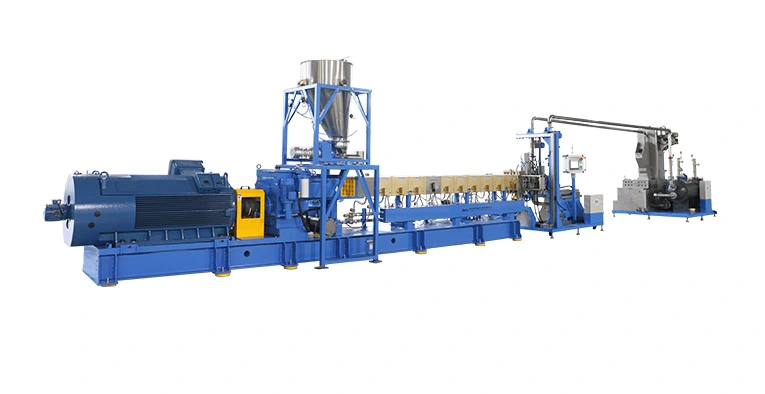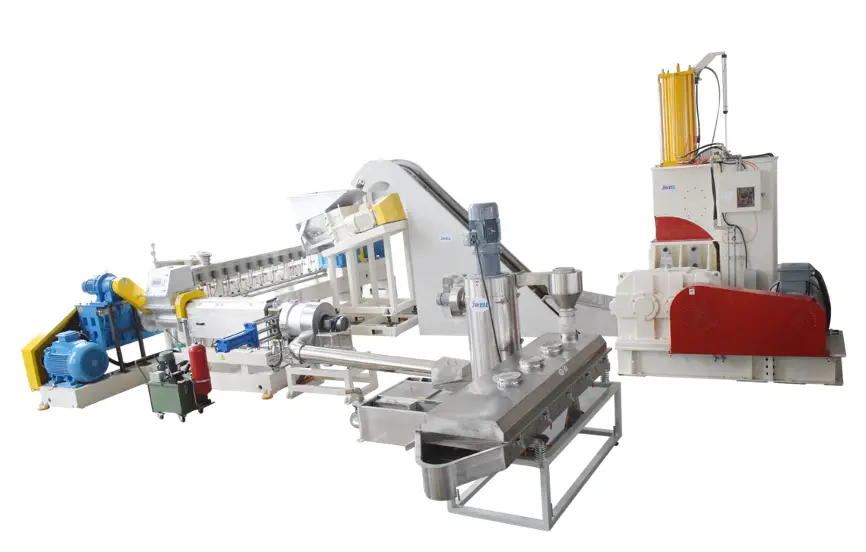
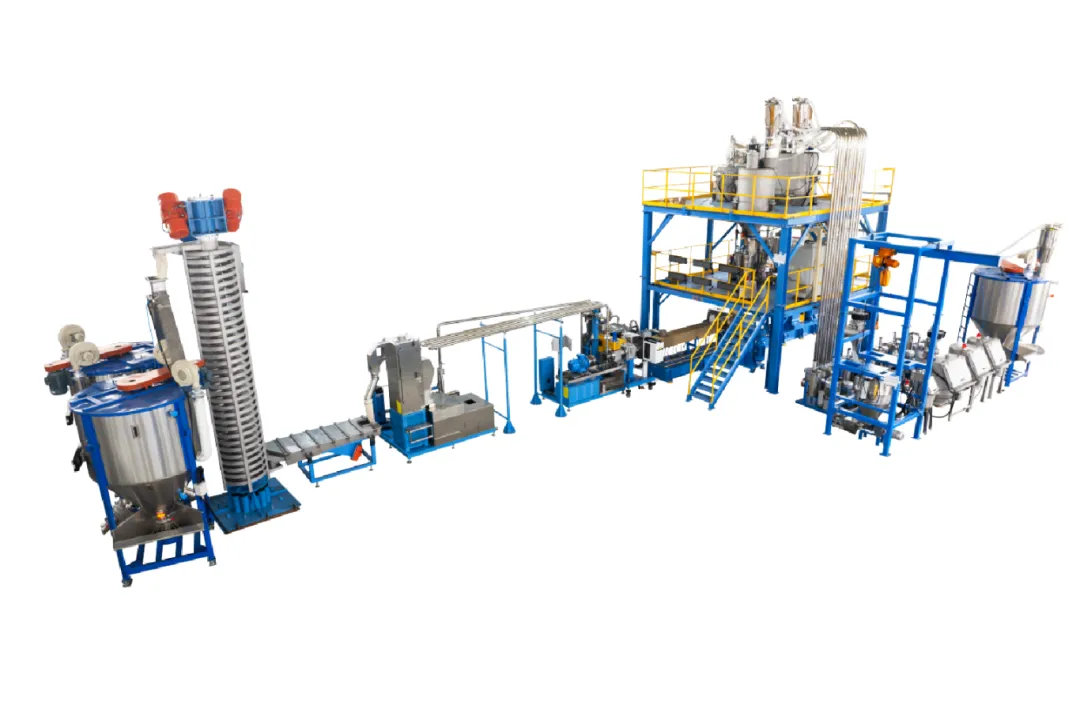
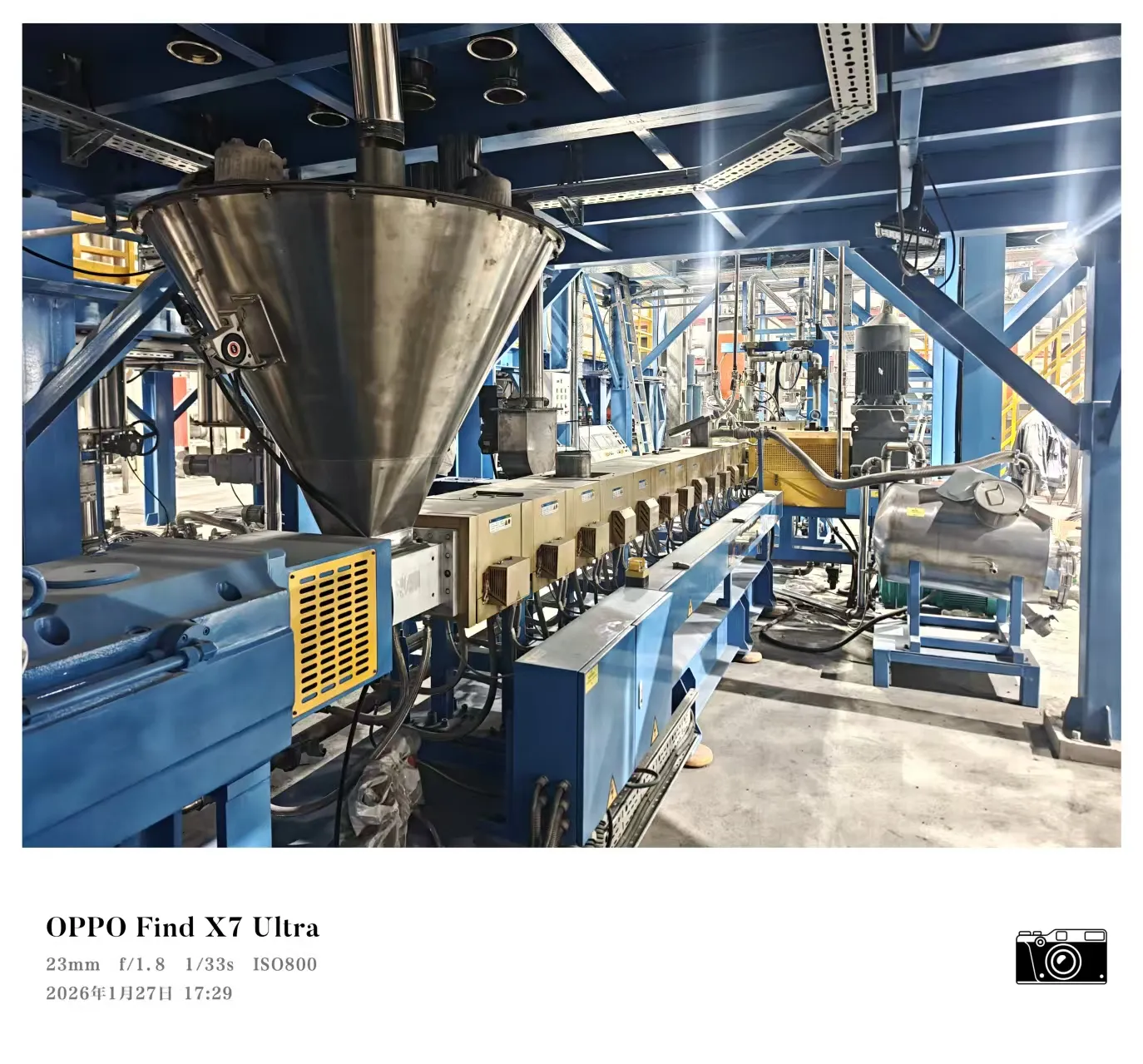
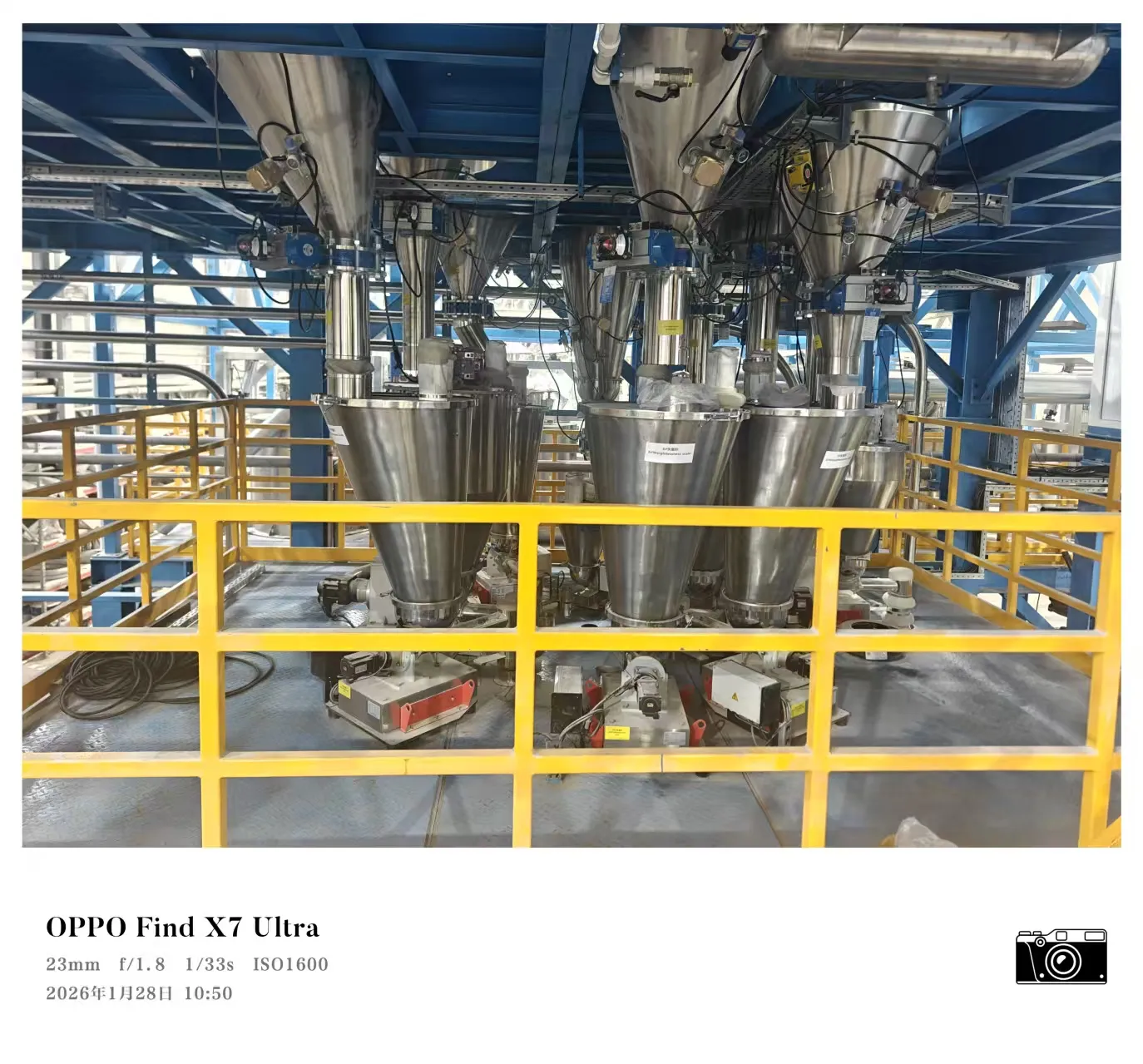
Suitable Materials: SEBS,PP,White oil,Calcium Carbonate,Antioxidant
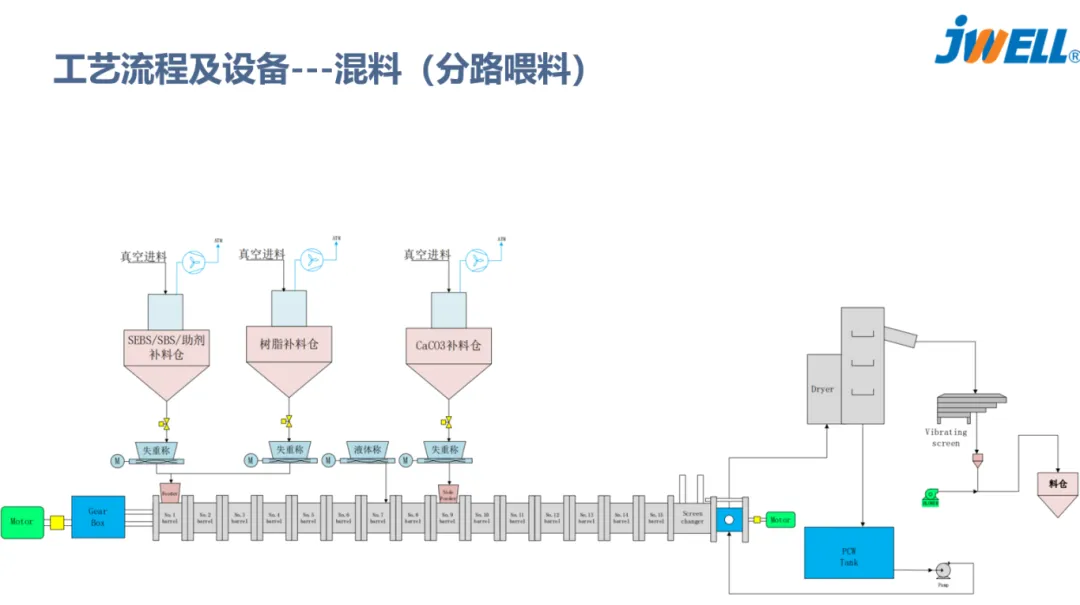
Process Flow: Premixing /Partial Premixing/Separate Feeding
Thermoplastic elastomers (TPE) are widely used in many fields due to their unique physical and chemical properties. The following are some of the main areas of application:
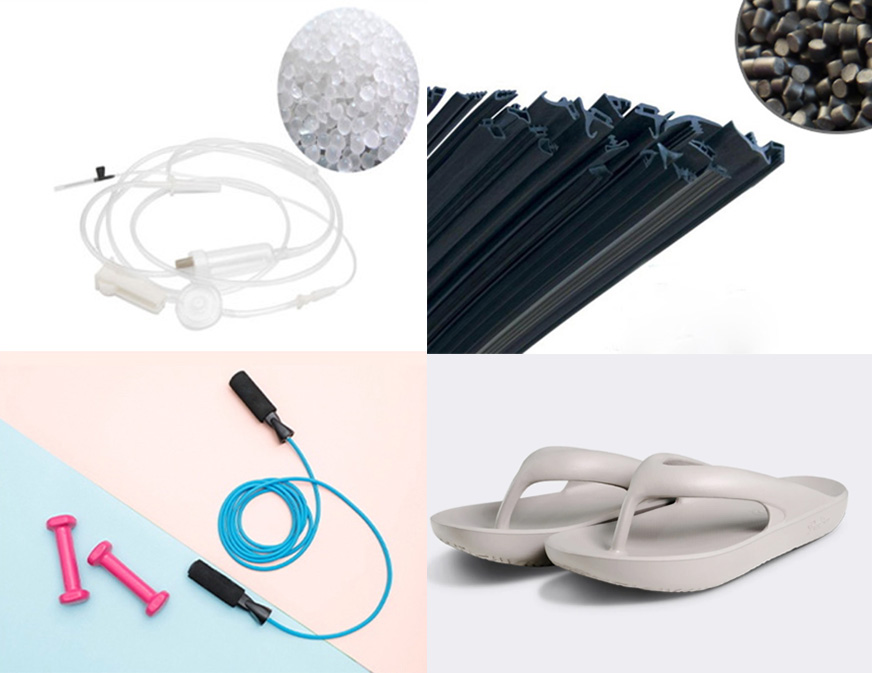
Automotive Industry:TPE is used to manufacture interior and exterior trim parts of automobiles, such as sealing strips, bumpers, dashboards, door panels, lights, etc.
Medical :Due to its biocompatibility and non-toxicity, TPE is used in the manufacture of medical instruments and equipment such as infusion tubes, blood bags, medical gloves, etc.
Consumer Products:TPE is used in the manufacture of various everyday items such as sports equipment, toys, footwear, furniture, etc.
Electronics and electrical appliances TPE is used to manufacture wires and cables, housings and gaskets of electronic equipment, etc.
Packaging industry TPE can be used to manufacture flexible packaging materials, seals and caps, etc.
The formula of TPE can be adjusted according to the required performance, and the following are some basic formula compositions:
Basic polymer | SBS,PP,TPU,TPEE Etc | |
Plasticizer | Phthalate esters,Aliphatic dibasic acid esters | Used to adjust the hardness and flexibility of TPE |
Filler | Calcium carbonate,talcum powder, etc | Improve the processing performance of TPE and reduce costs |
Stabilizers | Antioxidants, UV absorbers, etc | Improve the aging resistance of TPE |
Colorant | Inorganic pigment or organic dye | Adjust the color of TPE |
Other additives | Flame retardants, antistatic agents, lubricants, etc | Added according to specific application requirements |
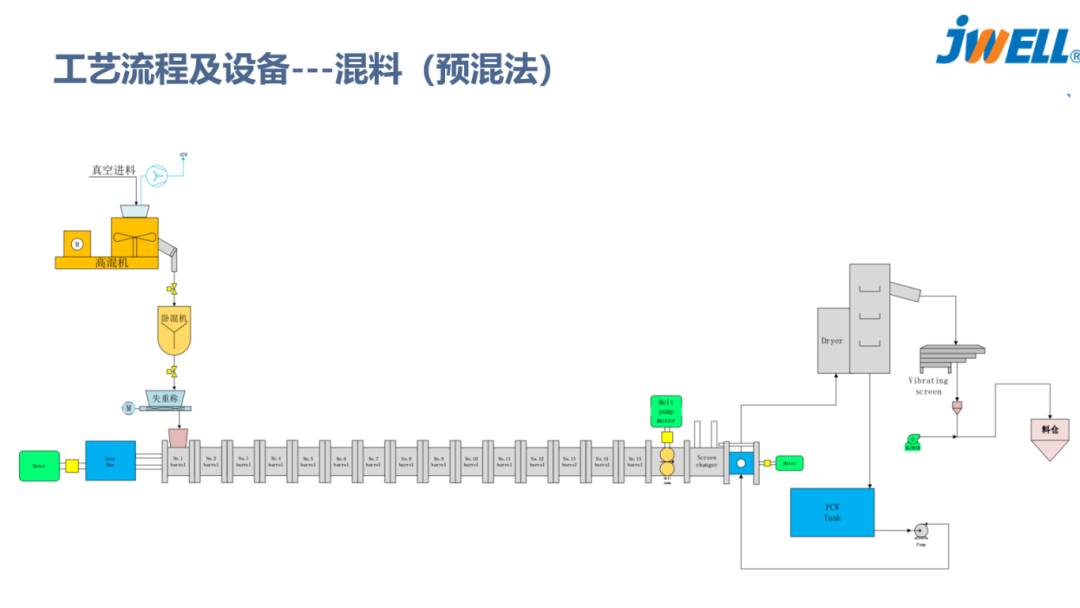
Premixing method --All the materials are pre-mixed in the high-speed mixer and then enter the cold mixer, and are directly fed into the twin-screw extruder for granulation.
Partial premixing method--Put SEBS/SBS into the high-speed mixer, add part or all of the oil and other additives for premixing, and then enter the cold mixer. Then, feed the premixed main material, fillers, resin, oil, etc. in separate ways through the weight loss scale, and extruder forgranulation.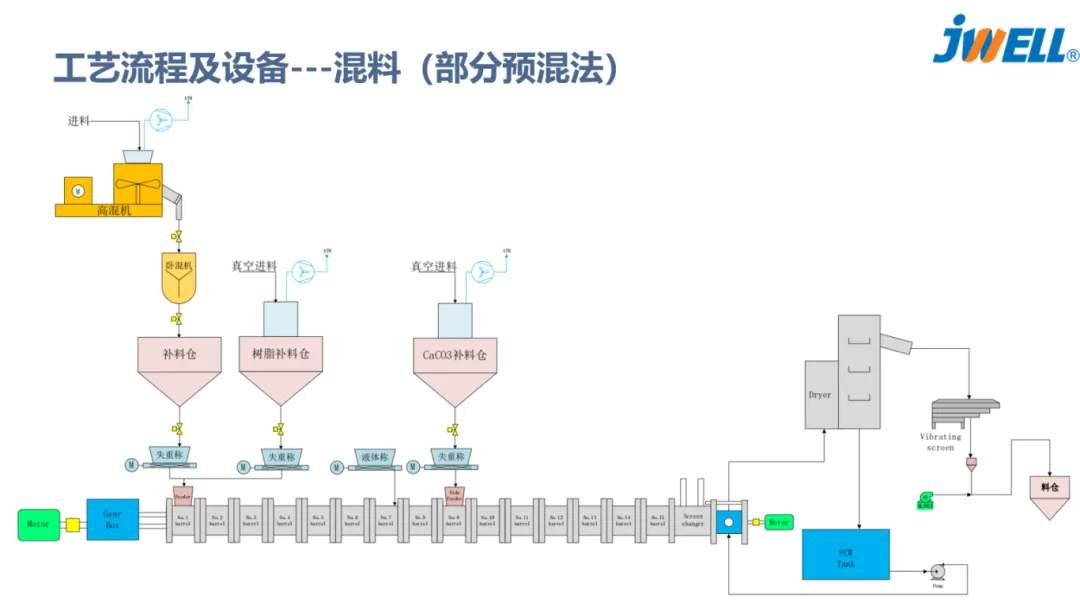
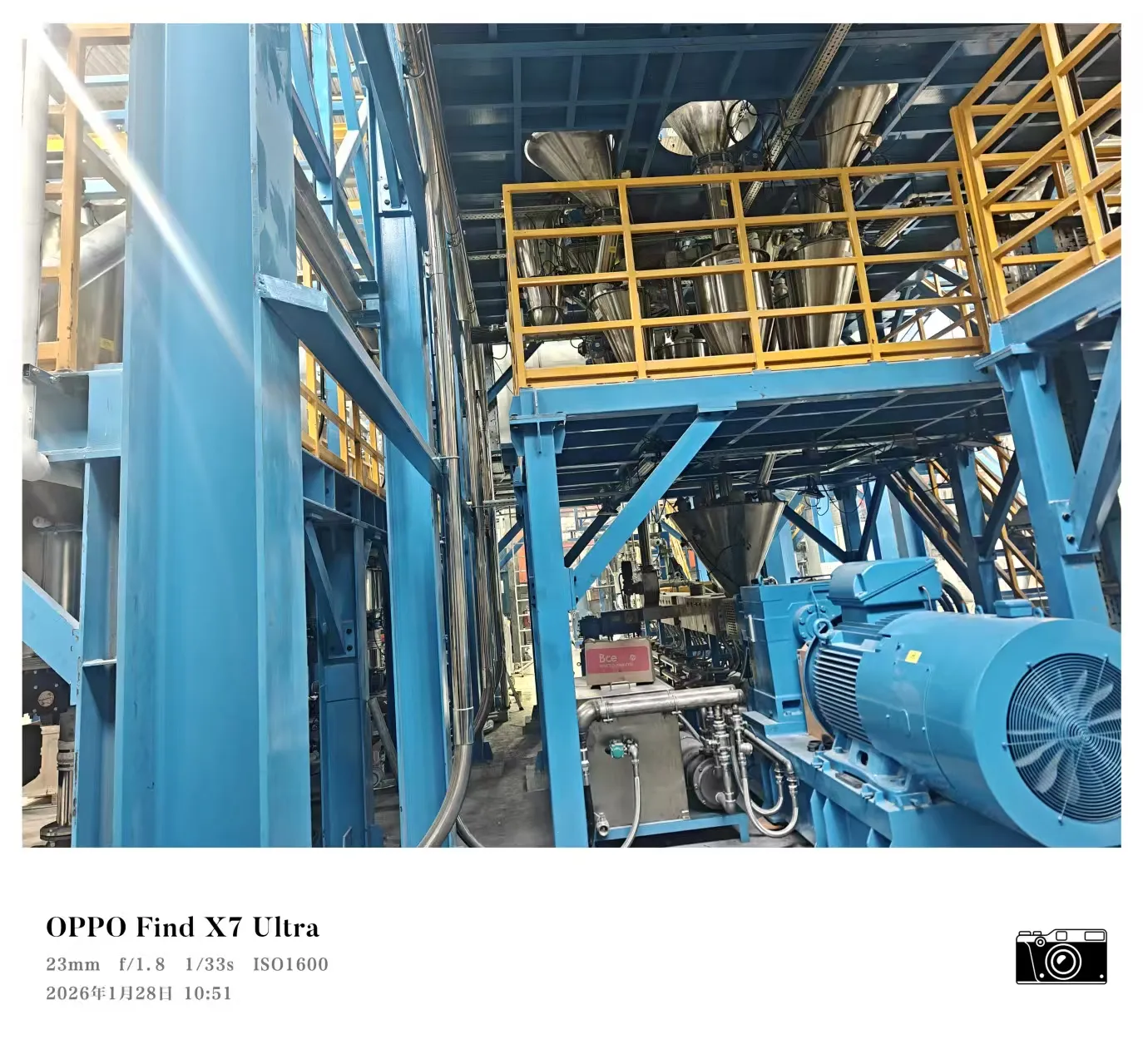
Separate feeding--All the materials were separated and measured respectively by loss-in-weight scales before being fed into the extruder for extrusion granulation.