Selecting between a single-screw and twin-screw system is one of the most important decisions when investing in a PET sheet extrusion line. Both technologies can convert polyethylene terephthalate into continuous sheet, but they approach melting, conveying, mixing and material conditioning differently. The better choice depends on the PET grade, recycled content, required sheet quality, production volume, formulation and upstream material preparation. This guide examines where each architecture fits, how drying and rPET variability change the decision, and what to evaluate when comparing extrusion line manufacturers for PET sheet production.
The better choice depends on the PET grade, recycled content, required sheet quality, production volume, formulation, and upstream material preparation. A line designed for consistent virgin PET may have very different requirements from one processing high proportions of recycled PET flakes.
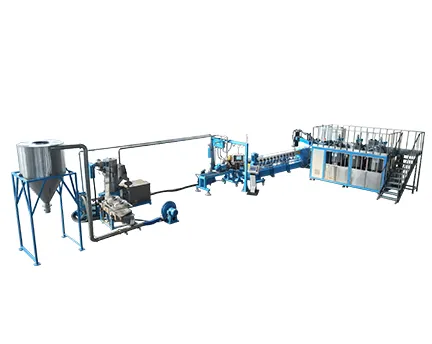
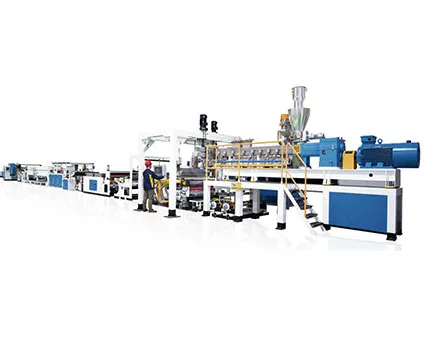
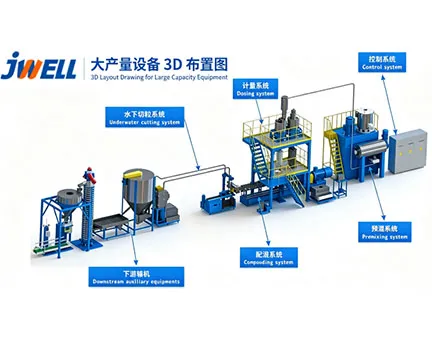
JWELL's sheet extrusion portfolio covers different plastic sheet applications and extrusion configurations, giving manufacturers multiple equipment options according to material and production requirements.
PET is a moisture-sensitive polyester, so material preparation has a direct influence on extrusion stability and final sheet quality.
If moisture remains in the resin during melting, hydrolytic degradation can occur. This can reduce molecular weight and affect properties such as viscosity, strength, transparency, and thermoforming performance.
The importance of drying is also demonstrated by the European PET Tray Platform. Its sheet-extrusion evaluation procedure specifies drying PET samples to below 50 ppm moisture before laboratory sheet extrusion. The procedure also uses melt filtration before the material is formed into sheet.
This means that the choice of sheet extruder machine should never be separated from the drying, feeding, filtration, and downstream sheet-forming systems.
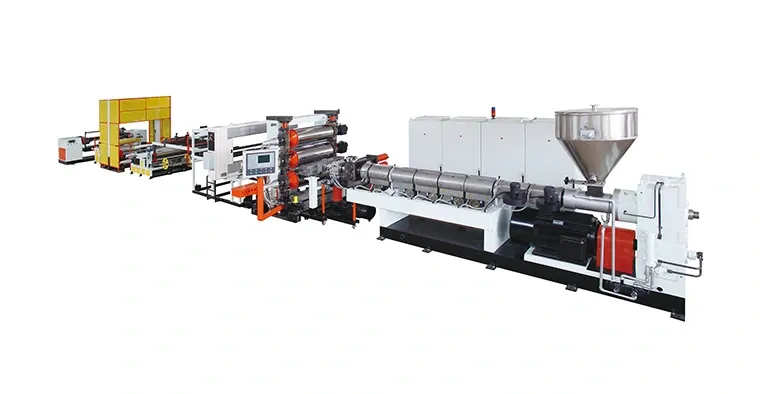
A single-screw line uses one rotating screw to convey and melt PET before the polymer reaches filtration, the die, and the sheet-forming section.
A typical configuration may include:
PET crystallization and drying
Automatic material feeding
Single-screw extrusion
Melt filtration
Melt metering
Flat T-die
Three-roll calender
Edge trimming
Silicone Oil Coating
Haul-off
Cutting or winding
The main advantage is process simplicity. When the raw material is consistent and the formulation remains relatively stable, the single-screw extruder provides a direct and familiar processing route.
For a manufacturer producing standard PET sheet continuously, this can make a single-screw sheet extrusion machine attractive because operators can focus on controlling the key variables of temperature, screw speed, melt pressure, die gap, roll temperature, and line speed.
A single-screw PET line is generally worth considering when:
Virgin PET is the primary raw material.
Resin quality is consistent.
Material drying is tightly controlled.
The formulation does not require intensive blending.
Production runs are relatively stable.
The factory prioritizes straightforward operation.
The target product has well-established processing parameters.
In these conditions, the additional mixing capability of a twin-screw system may not provide enough value to justify its additional process complexity.
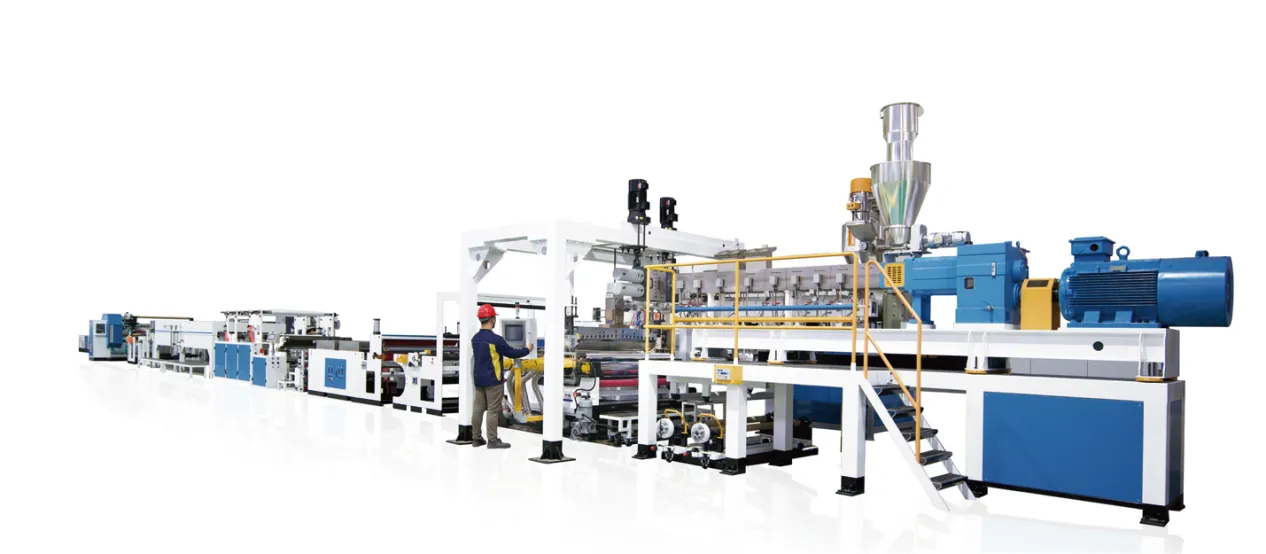
A twin-screw system uses two screws to convey and process the polymer. Depending on the machine design, the screws can provide enhanced material distribution and greater flexibility in configuring feeding, mixing, and venting zones.
This becomes particularly relevant when PET feedstock is more variable.
For example, recycled PET may contain differences in viscosity, particle size, contamination, additives, or moisture history. PETCORE Europe's recycling documentation shows that recycled PET flakes are increasingly being processed through extrusion and that extrusion is a key stage in converting flakes into usable recycled material.
A twin-screw configuration can therefore be attractive when the process requires more intensive material conditioning rather than simple melting and conveying.
A typical Twin-Screw PET Sheet Extrusion Line configuration may include:
PET crystallization
Automatic material feeding
Single-screw extrusion
Melt filtration
Melt metering
Flat T-die
Three-roll calender
Cooling
Edge trimming
Silicone Oil Coating
Haul-off
Cutting or winding
A twin-screw sheet extruder can be considered when the production line needs:
Greater formulation flexibility
Better mixing of additives
More controlled processing of recycled PET
Increased devolatilization capability
Greater tolerance for variable feedstock
More flexible screw configuration
Processing of complex PET blends
However, twin-screw should not automatically be interpreted as a higher-quality solution. The actual result depends on screw geometry, processing conditions, filtration, die design, and downstream sheet control.
The table below consolidates the architectural and processing differences between a single-screw and a twin-screw PET sheet extrusion line. Use it as a selection guide rather than a universal ranking — a properly engineered single-screw system can outperform an incorrectly configured twin-screw line for a specific PET sheet application.
| Selection Factor | Single-Screw Line | Twin-Screw Line |
| Machine structure | Simpler | More complex |
| Raw material processing | Crystallization+drying | Crystallization |
| Processing focus | Melting and stable conveying | Melting, mixing and material conditioning |
| Virgin PET | Very suitable | Suitable |
| Consistent PET feedstock | Excellent fit | Suitable |
| Recycled PET | Depends strongly on material preparation | Often more flexible |
| Mixing capability | Moderate | Higher |
| Devolatilization flexibility | System-dependent | Generally greater |
| Operation | Relatively straightforward | Requires more process control |
| Initial equipment complexity | Lower | Higher |
| Formulation flexibility | Moderate | High |
| Best fit | Stable, repetitive production | More complex or variable material streams |
The table is a process-selection guide rather than a universal ranking. A properly engineered single-screw system can outperform an incorrectly configured twin-screw line for a specific PET sheet application.
One of the most important considerations is that extruder selection cannot compensate for poor PET drying.
PET pellets and flakes must be conditioned before extrusion when the process requires strict moisture control. Drying performance depends on temperature, residence time, air dew point, material characteristics, and the efficiency of the dryer system.
The PETCORE Europe sheet-extrusion procedure specifically uses a desiccant dryer and a moisture target below 50 ppm for its PET sheet evaluation.
For a sheet extrusion equipment buyer, this means the quotation should be evaluated as a complete system. A high-performance extruder paired with inadequate drying can still produce unstable sheet.
The increasing use of rPET is one of the strongest reasons manufacturers reconsider their extrusion architecture.
PETCORE Europe reported that European rPET extrusion capacity for producing pellets from flakes reached approximately 1.4 million tonnes in 2022, demonstrating the growing industrial role of extrusion in the PET recycling chain.
Recycled PET can introduce greater variability than tightly controlled virgin resin. The feedstock may contain different intrinsic viscosities, residual contaminants, additives, or processing histories.
A manufacturer planning to use a high percentage of rPET should therefore evaluate:
Flake quality
Moisture level
Melt filtration
Volatile removal
Material viscosity
Contamination tolerance
Required sheet clarity
Thermoforming performance
A twin-screw system may provide additional process flexibility, but the entire material-preparation and filtration chain remains important.
When comparing sheet extruder company quotations, buyers often focus on kilograms per hour. Throughput is important, but it should not be evaluated in isolation.
A better assessment includes:
Usable output
Sheet thickness consistency
Width stability
Scrap rate
Melt pressure stability
Filter-change frequency
Energy consumption
Start-up waste
Changeover time
Operator requirements
Maintenance requirements
For example, a line with a higher theoretical output may not deliver better economics if it produces more off-specification sheet or requires longer changeovers.
The European PET Tray Platform's sheet-extrusion procedure also evaluates visible defects such as black specks, particulates, and gels, demonstrating why final sheet quality must be assessed alongside extrusion capacity.
For stable APET production using well-controlled raw material, a single-screw system can be a practical choice.
Packaging sheet manufacturers may prioritize:
Consistent gauge
High line availability
Stable melt filtration
Reliable roll cooling
Straightforward operation
When recycled content becomes a major part of the feedstock, material variability becomes more important.
In this situation, buyers should investigate whether a twin-screw system can provide useful advantages in mixing, venting, and material handling.
The right answer depends on the actual rPET quality rather than the recycled percentage alone.
If the product contains additives, modifiers, colorants, or multiple PET streams, stronger mixing capability may justify the use of a twin-screw configuration.
The objective should be consistent melt quality, not simply selecting a more complicated machine.
Companies comparing plastic sheet extrusion machine manufacturers should request a complete process proposal rather than only a machine quotation.
A reliable sheet extruder company should be able to explain:
Recommended screw configuration
PET drying requirements
Feeding system
Melt filtration
Extruder capacity
T-die design
Roll-stack configuration
Thickness-control method
Trimming system
Winding or cutting equipment
Expected output under defined conditions
It is also useful to request test data using the actual PET grade and recycled-content ratio that will be used in commercial production.
This approach provides a much more meaningful comparison than comparing motor power or screw diameter alone.
JWELL is an established jwell company providing plastic extrusion machinery for sheet, pipe, profile, film, and other applications. Its sheet-extrusion portfolio covers multiple material-processing requirements and production configurations.
For manufacturers evaluating a sheet extrusion machine, this broader engineering background can be useful because PET sheet production involves more than the extruder itself. Drying, filtration, die design, calendering, cooling, trimming, and winding all contribute to the final product.
A buyer comparing extrusion line manufacturers should therefore assess the complete process engineering capability of the supplier.
Yes. Single-screw systems can be suitable for PET sheet production when the resin is consistently prepared, properly dried, and the formulation does not require extensive mixing.
It can be advantageous when recycled PET introduces greater variability or when mixing and devolatilization are important. However, the actual benefit depends on feedstock quality and complete line configuration.
PET is moisture-sensitive, and appropriate drying is an important part of PET sheet processing. PETCORE Europe's sheet-extrusion procedure specifies drying to below 50 ppm for its evaluation process.
The entire process matters: material preparation, feeding, extrusion, filtration, die control, cooling, thickness control, and winding must work together.
Compare the complete line based on qualified output, sheet quality, material flexibility, drying requirements, filtration, energy use, scrap rate, maintenance, and expected operating conditions rather than focusing only on the extruder.
There is no universal winner between single-screw and twin-screw PET sheet extrusion lines.
A single-screw sheet extruder can be the right solution when the factory processes consistent PET materials and prioritizes straightforward, stable production. A twin-screw system becomes more attractive when recycled PET, additives, material variability, or enhanced mixing and devolatilization are important parts of the process.
The most reliable selection method is to start with the finished sheet specification and work backward through the material, drying, filtration, extrusion, die, cooling, and winding requirements.
For manufacturers comparing sheet extrusion machinery, the right investment is not necessarily the most sophisticated machine. It is the configuration that consistently converts the intended PET feedstock into saleable sheet at the required quality, output, and operating cost.
Continue exploring the JWELL sheet extrusion portfolio with these related guides and product references.
• PP Sheet Extrusion Line (JWELL Product Page)
• What Is the Process of Pipe Extrusion?
• Detailed Explanation of Three JWELL Extruders
• Sheet Extrusion Equipment Portfolio (JWELL)
• Twin-Screw Extruder Solutions (JWELL)
This article is prepared by the JWELL sheet extrusion engineering content team, drawing on JWELL’s published product specifications for PC, PMMA, PVC, PET, PE and TPO sheet extrusion lines, plus third-party industry references including ASTM standards, PETCORE Europe technical procedures, Covestro and Röhm material documentation, and Teknor Apex processing guides. Specifications cited (width, thickness, capacity, screw type) reflect JWELL’s published configurations at the time of writing and may vary with specific project requirements.
Last updated: September 2026
Reviewed by: JWELL Sheet Extrusion Engineering Team
Primary sources cited: JWELL product pages (jwell-machinery.com), ASTM International store.astm.org, PETCORE Europe technical library, Covestro Solutions Center, Röhm PMMA application resources, Teknor Apex technical library.