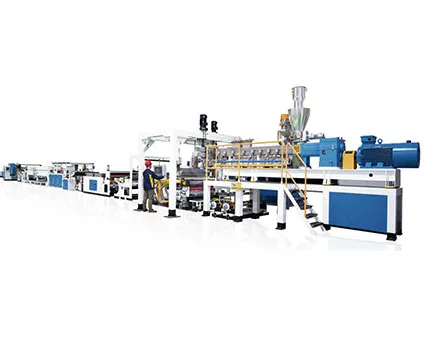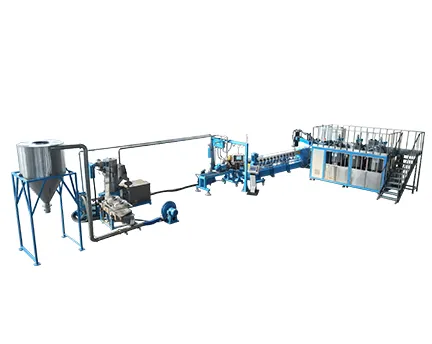
Choosing a waterproof membrane extrusion line is not simply a matter of selecting the highest-output sheet extruder machine. PE, PVC and TPO membranes have different material characteristics, product structures and performance requirements, so their extrusion lines must be configured accordingly. This guide compares the three material-specific lines from the perspective of plastic sheet extrusion machine manufacturers, covering material handling, reinforcement, calendering, width, thickness control and the standards that govern each membrane type, so buyers can match the correct sheet extrusion equipment to the right application.
JWELL's sheet extrusion portfolio includes dedicated PE Waterproof Membrane Sheet Extrusion Lines, PVC Waterproof Membrane Sheet Extrusion Lines and TPO Waterproof Membrane Sheet Extrusion Lines. This product segmentation reflects the fact that waterproof membrane production requires material-specific extrusion and downstream processing rather than one universal machine configuration.
All three materials can be processed into continuous waterproof sheets, but their processing behavior is different.
PE-based membranes are commonly associated with geomembrane applications where wide width, thickness uniformity, chemical resistance and long-term durability are important. JWELL's PE line is specifically designed for low-shear processing and large-width production, with published configurations reaching 6000–8000 mm product widths.
PVC waterproof membranes, meanwhile, are flexible sheets whose formulation and reinforcement can vary according to the application. ASTM D4434/D4434M covers flexible PVC sheet roofing membranes and includes requirements related to thickness, tensile properties, elongation, seam strength, tear resistance, weathering and dimensional change.
TPO belongs to the thermoplastic polyolefin family and is commonly produced as reinforced roofing membrane. ASTM D6878/D6878M specifies TPO-based sheet roofing and includes properties such as thickness, tensile strength, elongation, tear strength, heat aging, weather resistance and factory seam strength. These differences directly influence the design of the sheet extrusion equipment.
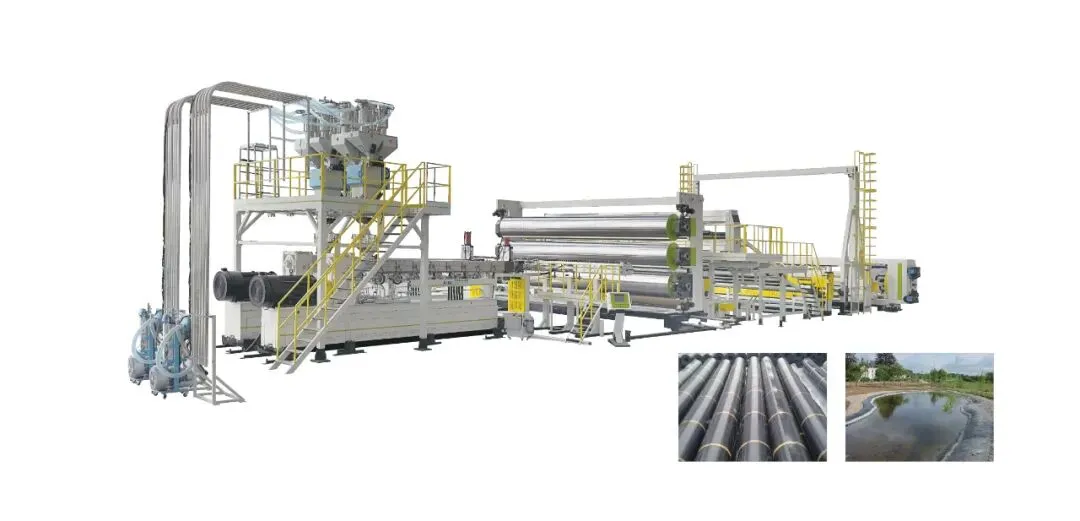
PE waterproof membranes often require very wide sheets. This puts particular emphasis on melt distribution, calendering and thickness control.
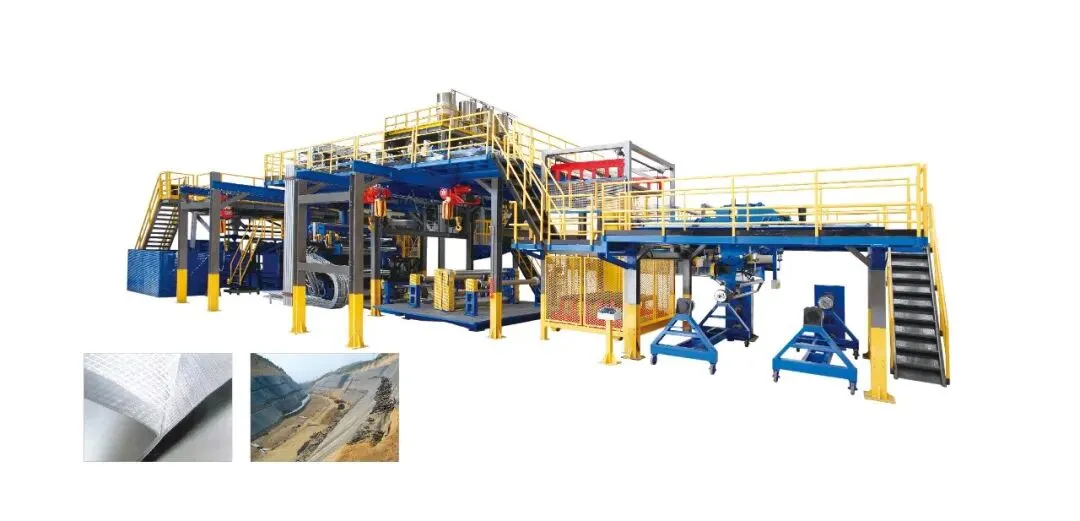
JWELL's PE waterproof membrane system uses a low-shear, energy-conscious extrusion configuration and a dedicated calender frame and roller structure for extra-wide geomembranes. Its published models include:
JW150 + JWS150: up to 6000 mm width and 800–1200 kg/h
JW180 + JWS180: up to 8000 mm width and 1200–1500 kg/h
The listed thickness ranges are 0.5–3 mm and 1–3 mm respectively.For PE geomembranes, thickness is more than a dimensional parameter. ASTM D5994/D5994M-26 identifies thickness as a basic index property for geomembrane quality control and notes its relationship with properties such as tensile yield and puncture strength.
This makes the combination of sheet extruder, die and calendering system particularly important for wide PE membrane production.
PVC requires a different processing approach because waterproof membranes are generally flexible and may contain reinforcement.
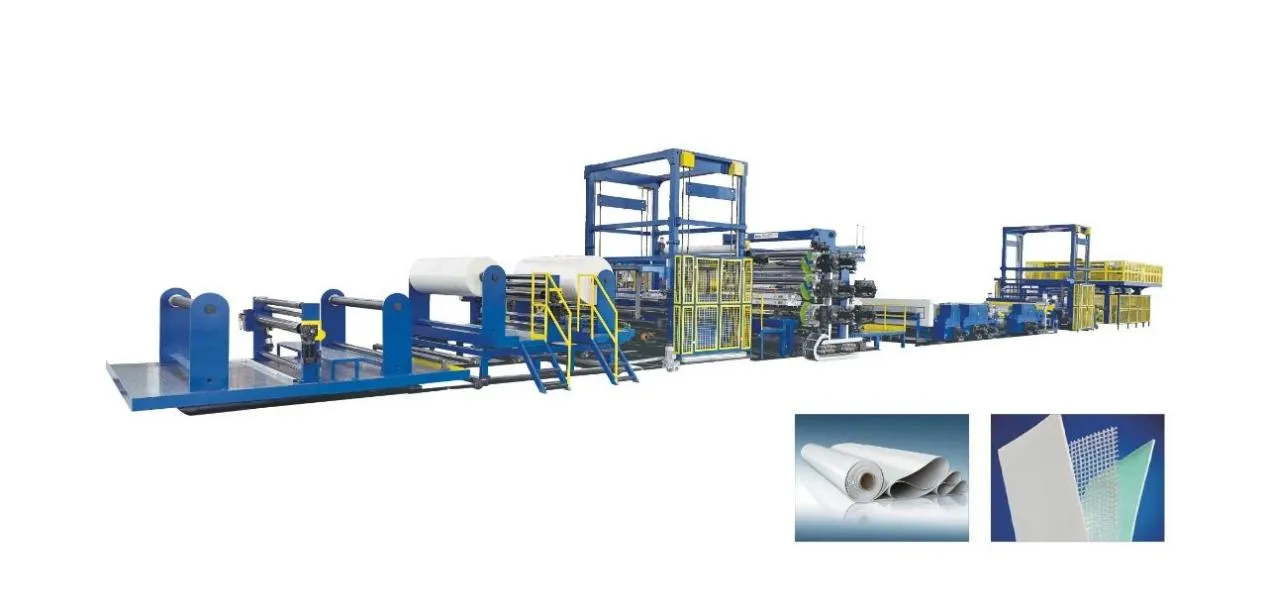
A PVC sheet extrusion machine therefore needs to provide controlled plasticization and stable sheet formation without compromising the formulation or final flexibility.
JWELL publishes several PVC waterproof membrane configurations. The SJZ80/156 + SJZ92/188 system is listed for 0.5–3 mm products with widths of 1200–2000 mm and capacity of 800–900 kg/h. Another SJP130/36 + SJZ92/188 configuration is listed at 2000 mm width and 1200–1300 kg/h.
PVC membrane production also has different quality-control considerations from PE geomembranes. ASTM D7176-22, for example, addresses non-reinforced PVC geomembranes used in buried applications and includes material, sheeting, workmanship and testing requirements.
Therefore, a PVC line should be evaluated according to the formulation, membrane structure and intended installation environment rather than simply by output.
TPO lines introduce another important equipment consideration: reinforced multilayer construction.
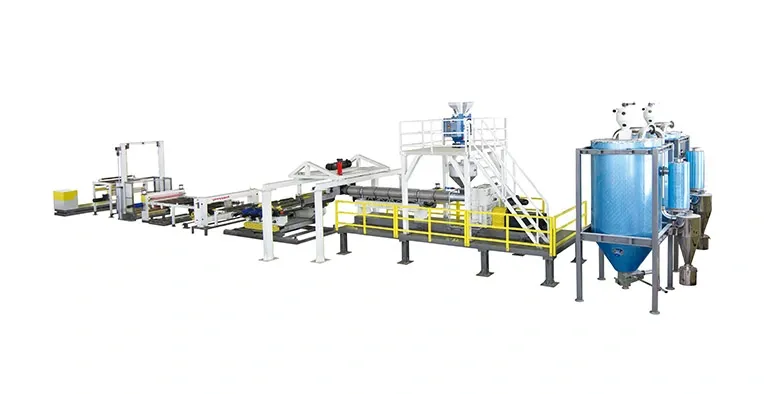
JWELL describes its TPO waterproof membrane as having a polyester fabric reinforcement layer, with textile fiber and aluminum foil laminated on the surface depending on the product structure. The published TPO line uses two extrusion units and supports products 2000–3000 mm wide and 0.8–3 mm thick, with listed capacity of 700–1200 kg/h.
This means the equipment must coordinate extrusion with reinforcement positioning and composite formation.
TPO membrane standards also emphasize the importance of the finished reinforced structure. ASTM D6878/D6878M-26 specifies that TPO roofing sheets contain reinforcing fabrics or scrims and must meet requirements for mechanical properties, weather resistance and factory seam performance.
For buyers, the key question is therefore not only whether a sheet extruder company can process TPO, but whether its complete line can consistently produce the required reinforced membrane structure.
The table below summarizes how PE, PVC and TPO waterproof membrane extrusion lines differ in processing focus, structure, width priority, thickness control, reinforcement strategy, key quality concerns and typical applications. Use it as a side-by-side reference when comparing sheet extruder companies or specifying a new waterproof membrane line.
| Factor | PE Waterproof Membrane | PVC Waterproof Membrane | TPO Waterproof Membrane |
|---|---|---|---|
| Main processing focus | Wide-width extrusion and thickness stability | Controlled flexible sheet formation | Multilayer extrusion and reinforcement |
| Typical structure | Homogeneous or application-specific | Flexible sheet, with or without reinforcement | Polymer layers with reinforcement |
| Width priority | Very high | Medium to high | Medium to high |
| Thickness control | Critical | Critical | Critical |
| Calendering | Important for wide geomembranes | Important for dimensional stability | Important for composite formation |
| Reinforcement | Application dependent | Common in roofing products | Common |
| Main quality concerns | Thickness, puncture, stress cracking, durability | Tensile strength, elongation, seams, weathering | Mechanical properties, weathering, seams |
| Typical applications | Reservoirs, tunnels, landfills, roofs | Roofing and waterproof construction | Roofing, tunnels and basements |
The biggest mistake when comparing sheet extrusion machinery is assuming that the same machine architecture can deliver identical results with every polymer.
For PE, screw and barrel design must support stable melting while avoiding unnecessary shear. This becomes especially important for large-width membranes where small melt-distribution differences can become large thickness variations across the sheet.
For PVC, plasticization and temperature control are more closely connected to the formulation. The extrusion system must maintain stable processing conditions while producing a flexible membrane with the required physical properties.
For TPO, the extrusion process must be coordinated with reinforcement and downstream lamination. The line therefore becomes more than a simple extruder-and-die system.
After the molten polymer leaves the die, the downstream section determines much of the membrane's final dimensional stability.
For PE, JWELL specifically highlights its calender frame and roller structure for extra-wide geomembranes. For PVC and TPO, the calendering section must also accommodate the material's flexibility and, where applicable, reinforced or laminated construction.
Thickness measurement is especially important because waterproofing performance can depend on maintaining a consistent membrane profile. ASTM's current geomembrane thickness method, D5994/D5994M-26, specifically addresses measurement of both smooth and textured geomembranes.
When comparing plastic sheet extrusion machine manufacturers, buyers should evaluate the entire process rather than the extruder alone.
First determine whether the product is homogeneous, reinforced, laminated or multilayered. This directly affects the number of extruders and downstream equipment required.
A high-capacity machine is not necessarily suitable if its die and calendering system cannot maintain the required width and thickness profile.
Roofing membranes and buried geomembranes can have very different requirements. For example, ASTM D6878 addresses TPO roofing, while ASTM D7176 addresses non-reinforced PVC geomembranes for buried applications.
A reliable sheet extruder company should be able to explain the relationship between feeding, extrusion, die forming, reinforcement, calendering, cooling, thickness control and winding.
JWELL's current sheet extrusion portfolio separates PE, PVC and TPO waterproof membrane systems rather than presenting them as one generic sheet line machine. Its portfolio also includes other sheet solutions such as HDPE/PP T-Grip, drainage sheets and thermoforming sheet lines. This material-specific approach is useful because waterproof membranes can differ significantly in polymer behavior, width, reinforcement and end-use requirements.
For manufacturers considering a PE sheet extrusion line, or a PVC/TPO alternative, the correct comparison should therefore focus on the complete production process rather than extruder capacity alone.
Not necessarily. Although all three are thermoplastic materials, their processing requirements and product structures can differ substantially. Dedicated or specially configured systems are generally more appropriate.
PE geomembrane production can require particularly wide equipment. JWELL lists PE configurations with product widths up to 8000 mm.
Calendering controls cooling, thickness, flatness and surface characteristics. For wide membranes, stable roller geometry and temperature control are particularly important.
Many TPO roofing membrane structures use reinforcement. ASTM D6878/D6878M-26 specifically covers TPO sheet roofing containing reinforcing fabrics or scrims.
Compare the target polymer, membrane structure, width, thickness, output, reinforcement method, die configuration, calendering system, thickness control and final application requirements.
PE, PVC and TPO waterproof membrane extrusion lines may appear similar because all produce continuous polymer sheets, but their equipment priorities are different.
PE lines emphasize wide-width production and thickness stability. PVC lines focus on controlled flexible-sheet processing and formulation compatibility. TPO lines add reinforcement and composite-layer requirements.
For this reason, selecting a sheet extrusion machine should begin with the membrane structure and required performance, followed by the appropriate extruder, die, calendering and downstream configuration. A specialized sheet extruder company with experience in waterproof membrane production can then configure the line around the actual product rather than applying a generic extrusion solution.
Continue exploring the JWELL sheet extrusion portfolio with these related guides and product references.
• JWELL PE1600mm Large-Size Pipe Extrusion Line for Egyptian Customer
• Advantages of JWELL Double-Wall Corrugated Pipe Line
• JWELL Engineers Go Abroad to Install Equipment Smoothly
• PE Waterproof Membrane Sheet Extrusion Line (JWELL Product Page)
• PVC / TPO Waterproof Membrane Sheet Extrusion Line (JWELL Product Page)
This article is prepared by the JWELL sheet extrusion engineering content team, drawing on JWELL’s published product specifications for PC, PMMA, PVC, PET, PE and TPO sheet extrusion lines, plus third-party industry references including ASTM standards, PETCORE Europe technical procedures, Covestro and Röhm material documentation, and Teknor Apex processing guides. Specifications cited (width, thickness, capacity, screw type) reflect JWELL’s published configurations at the time of writing and may vary with specific project requirements.
Last updated: September 2026
Reviewed by: JWELL Sheet Extrusion Engineering Team
Primary sources cited: JWELL product pages (jwell-machinery.com), ASTM International store.astm.org, PETCORE Europe technical library, Covestro Solutions Center, Röhm PMMA application resources, Teknor Apex technical library.