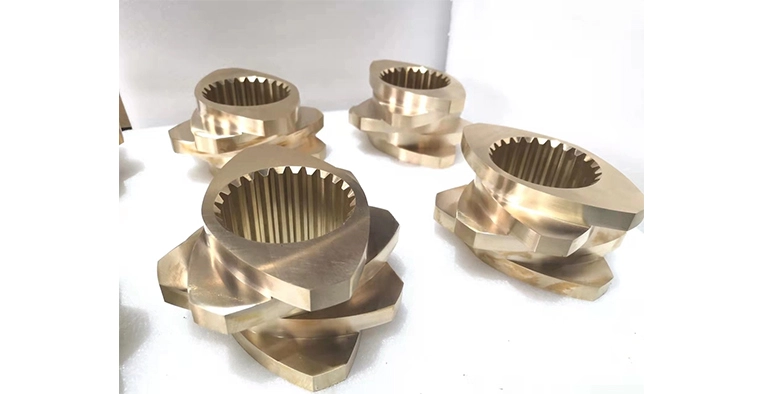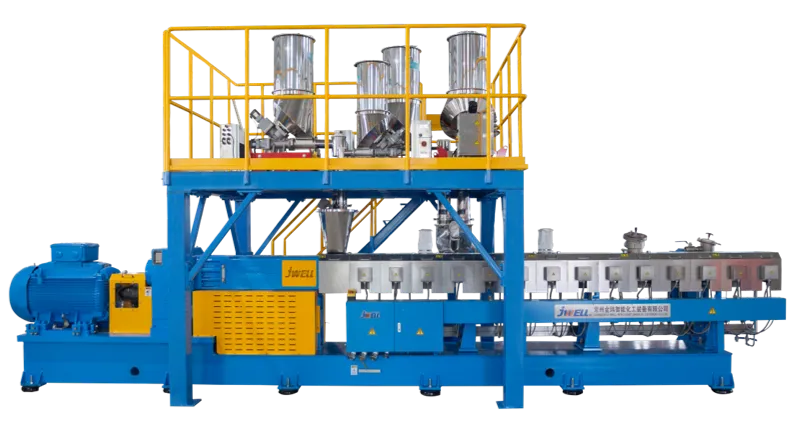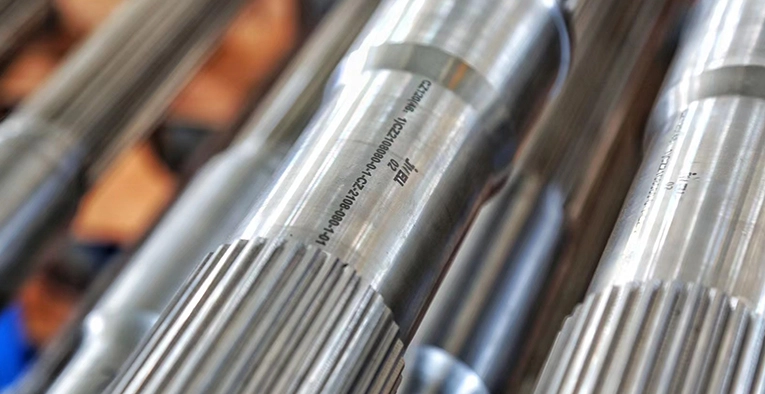
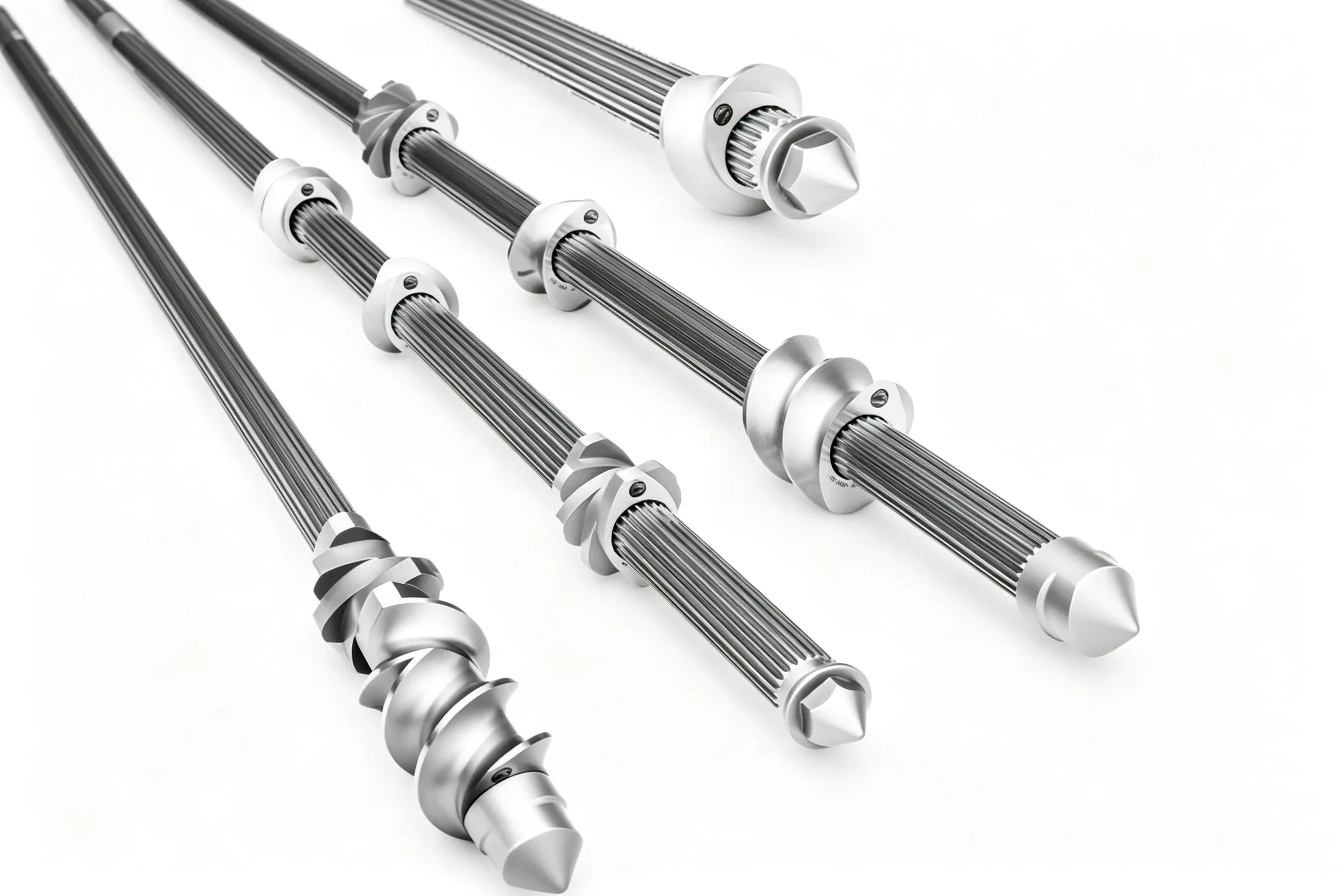
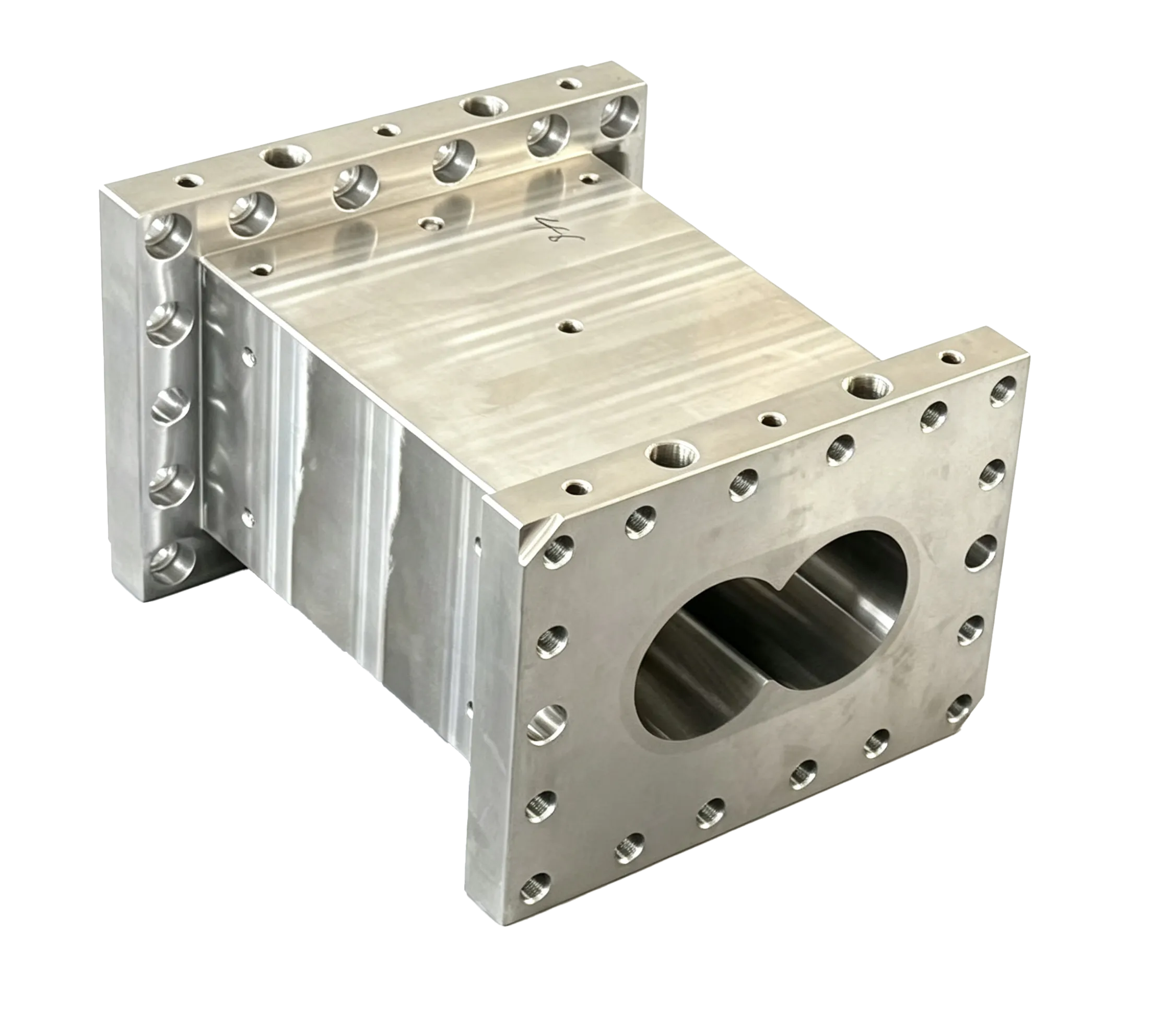
The screw shaft, barrel, and screw elements are the core components that determine the efficiency and process performance of an extruder. These three parts work together to complete material conveying, melting, mixing, and pressure building. The following sections describe the specifications and features of each category.
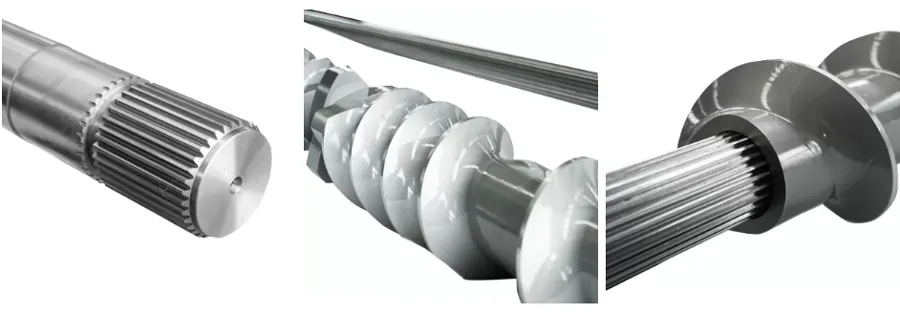
Function: The screw shaft connects the drive unit to the screw segments and transmits torque. Its strength directly affects the stability of the entire screw assembly.
Manufacturing features: Material selection and heat treatment are matched to specific machine models, with tight precision control.
Selection principle: Choose based on equipment model and process requirements to avoid over-specification or insufficient strength.
Application: Twin screw extruders
Typical Shaft Material Selection & Performance Parameters:
| Material | Hardness | Source | Torque |
| 40CrNiMoA | HB300-380 | Local | 6-9 |
| NAK80 | HB350-380 | Japan | 9-12 |
| H11/H13 | HB360-390 | USA/Japan | 9-12 |
| WR12 | HB360-390 | Local | 9-12 |
| WR15E | HB360-390 | Finland | 10-13.5 |
| DH2F | HB360-390 | Japan | 10-13.5 |
Different Types of Barrels:
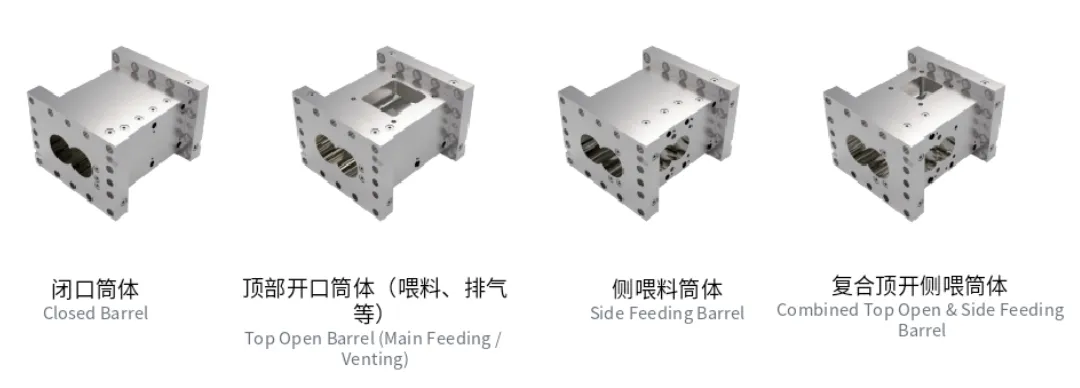
Flexible Barrel Configuration Process of Barrel:A twin screw extruder can be divided into multiple functional zones based on process requirements. Each zone serves a specific task, allowing engineers to adjust the configuration for different materials:
·Solids conveying —— Material enters the barrel from the feed port;
·Melting —— Material is melted by heat and shear;
· Additive mixing —— Additives and fillers are mixed into the melt;
·Liquid injection —— Liquid components are injected during the process;
·Downstream additive addition —— More additives are introduced after the melting zone;
· Venting —— Volatiles are removed via atmospheric or vacuum venting;
·Pressure building —— Pressure is generated to push the melt toward the die;
·Heat transfer —— Temperature is controlled in each zone;
·Reactive extrusion —— Chemical reactions are completed during extrusion.
Advantages:
·Flexible structure, combinable on demand —— JWELL barrels are available in solid, liner insert, and modular designs. The modular structure allows users to combine or replace individual barrel sections based on different process stages, without replacing the entire barrel;
· Independent temperature control per zone —— Each barrel zone has its own electric heating and liquid cooling system with separate temperature settings. Different zones can maintain different temperatures according to material requirements, with fast response and minimal interference between zones;
·Clamshell design for easy maintenance —— JWELL offers clamshell barrels that open horizontally, exposing the screws for cleaning, inspection, and replacement. No special tools or lifting equipment are needed for disassembly and assembly, saving time and effort in daily maintenance;
·Customizable for various applications —— In addition to standard specifications, JWELL can customize barrel structures, materials, and dimensions based on the customer's material characteristics, process requirements, and machine model.
Typical Material for Barrels:
| Material | Type | Hardness | Wear Grade | Corrosion Grade |
| 38CrMoAlA | Nitriding steel | HV950-1050 | ★ | ★★ |
| a101 | FeNi alloy | HRC60-64 | ★★★ | ★ |
| CR26 | High chromium alloy | HRC60-64 | ★★★★ | ★ |
| AD-02 | Nickel based alloy | HRC52-55 | ★★★★★★ | ★★★★★★ |
| AD-02+25%WC | WC reinforced | HRC54-56 | ★★★★★★★ | ★★★★★★ |
| WR13 | PM+HIP | HRC60-64 | ★★★★★★ | ★★★★ |
| X260 | PM+HIP | HRC60-64 | ★★★★★★★ | ★★★ |
| SAM26 | PM+HIP | HRC60-64 | ★★★★★★★ | ★★★ |