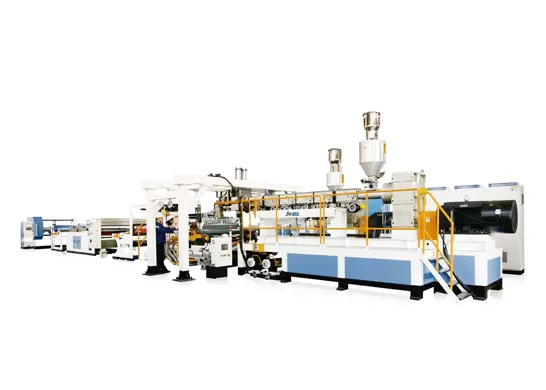
The function of Jwell's small extruder screw is to gradually convert the rotational movement of the rubber material into linear motion, pushing it in the direction of the machine head. It works in conjunction with the body to compress, generate heat, soften, stir, and mix the rubber material.
The movement of the material in the extruder screw is studied in three segments; therefore, the screw design often follows a segmented approach. Since the sections form a continuous channel, in actual production, it is not necessary to divide the screw into three segments as long as it meets the requirements. In fact, some screws have only two segments, while others are unsegmented. For example, when extruding materials with good crystallinity, such as nylon, only feeding and homogenizing sections are needed. For screws used for extruding soft polyvinyl chloride plastics, the entire compression section can be used without dividing it into feeding and homogenizing sections.
The main method is to increase the diameter of the screw. Since the output of the extruder is proportional to the diameter of the screw, increasing the diameter will also increase the output of the material. However, the small extruder screw is not a screw conveyor. Under the premise of unchanged screw speed, a large diameter and large screw groove screw have less stirring and shearing effect on the material compared to a small diameter screw. Therefore, modern small extruder screws mainly improve capacity and pipe quality by increasing the screw speed.
The design of the Jwell small high-speed and high-efficiency extruder screw is based on high rotational speed. The plasticization effect of this type of screw is less effective at low speeds, but it gradually improves as the screw speed increases, achieving optimal results at design speed. This results in both high capacity and acceptable plasticizing quality.
By improving the material and production process of the screw, reasonably designing the screw structure, shortening the length of the feeding section, increasing the flow speed of the material, and reducing extrusion resistance, it is possible to decrease torque and improve the bearing capacity of the screw. In terms of heater power, high-speed and high-efficiency extruders, compared to ordinary extruders with the same screw diameter, do not require increased heater power despite the increase in capacity.