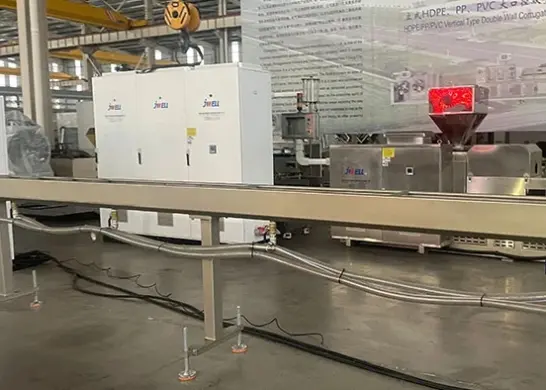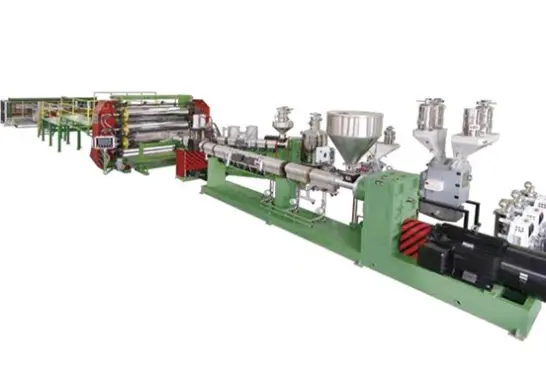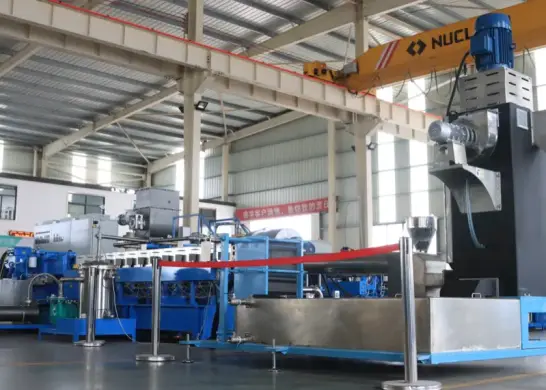
Plastic compounding is the process of blending polymers with additives, fillers, pigments, reinforcing materials, or functional ingredients to create materials with specific physical, mechanical, or chemical properties. Modern plastic compounding is widely used in the production of engineering plastics, color masterbatch, filler masterbatch, recycled plastics, biodegradable materials, and specialty polymer compounds. A Twin Screw Extruder is the most commonly used equipment because it provides superior mixing, excellent dispersion, flexible formulation capability, and stable production performance. This guide explains the complete plastic compounding process, common materials, equipment selection, and industrial applications.
Plastic compounding is the process of modifying a base polymer by incorporating various additives to improve performance or create new material properties.
Rather than using pure plastic resin, manufacturers combine polymers with carefully selected ingredients to achieve specific characteristics such as:
Higher strength
Better impact resistance
Flame retardancy
UV resistance
Electrical conductivity
Improved color
Lower production cost
Plastic compounding has become an essential manufacturing process across automotive, packaging, electrical, medical, construction, and consumer goods industries.
Modern products require materials with increasingly complex performance requirements.
Instead of developing entirely new polymers, manufacturers modify existing materials through compounding.
Benefits include:
Improved mechanical properties
Enhanced heat resistance
Better chemical resistance
Lower production costs
Customized product performance
Increased sustainability through recycled materials
For many applications, compounding is the most economical method for developing high-performance plastic materials.
Although formulations vary, the basic plastic compounding process follows the same workflow.
Raw materials typically include:
Virgin Polymer
Recycled Polymer
Pigments
Fillers
Additives
Reinforcing Fibers
Material compatibility plays a critical role in final product quality.
Automatic gravimetric feeding systems ensure accurate dosing for each ingredient.
Consistent feeding improves formulation accuracy and production stability.
Inside the Twin Screw Extruder, materials are:
Melted
Mixed
Dispersed
Homogenized
The modular screw configuration can be optimized for different formulations.
Vacuum venting removes:
Moisture
Air
Volatile compounds
This improves pellet quality and reduces defects.
The molten compound is converted into pellets through:
Water Ring Pelletizing
Strand Pelletizing
Underwater Pelletizing
Material | Function |
PE | Carrier Resin |
PP | Carrier Resin |
ABS | Engineering Plastic |
PA | Engineering Plastic |
PET | High Performance Polymer |
CaCO₃ | Cost Reduction |
Talc | Stiffness Improvement |
Carbon Black | Coloring |
Glass Fiber | Reinforcement |
Flame Retardants | Fire Resistance |
Among all plastic compounding equipment, the Twin Screw Extruder has become the industry standard due to its superior mixing performance, flexible process design, and ability to handle a wide range of polymer formulations.
Unlike single screw systems that mainly convey and melt materials, twin screw extruders perform conveying, melting, dispersing, mixing, venting, and homogenizing simultaneously, making them ideal for complex compounding applications.
Superior Mixing and Dispersion
The intermeshing screw elements continuously split and redistribute materials, ensuring excellent dispersion of pigments, fillers, glass fibers, and functional additives.
Benefits include:
More uniform material distribution
Better mechanical properties
Improved product consistency
Reduced material defects
Flexible Formulation Capability
A modular screw configuration allows manufacturers to process different materials on the same production line simply by changing screw elements and process settings.
Typical formulations include:
Color Masterbatch
Filler Masterbatch
Glass Fiber Reinforced Compounds
Flame Retardant Compounds
Conductive Compounds
Biodegradable Materials
This flexibility significantly reduces investment costs while expanding production capabilities.
Higher Production Efficiency
Compared with traditional extrusion systems, twin screw technology offers:
Higher output capacity
Lower energy consumption per ton
Faster material changeover
Continuous stable production
For manufacturers processing multiple product types, these advantages translate into lower operating costs and higher productivity.
Better Degassing Performance
Many engineering plastics and recycled materials contain moisture or volatile substances that can affect product quality.
Twin screw extruders equipped with vacuum venting systems effectively remove:
Moisture
Residual monomers
Air bubbles
Volatile compounds
This results in smoother pellets, improved appearance, and better downstream processing performance.
Selecting the right extrusion technology depends on the complexity of your formulation and production requirements.
Comparison | Single Screw Extruder | Twin Screw Extruder |
Mixing Performance | Moderate | Excellent |
Pigment Dispersion | Limited | Superior |
High Filler Processing | Limited | Excellent |
Engineering Plastics | Limited | Excellent |
Process Flexibility | Low | High |
Material Compatibility | Standard Polymers | Complex Formulations |
Automation Level | Medium | High |
Overall Productivity | Good | Excellent |
For applications involving masterbatch, engineering plastics, recycled polymers, or specialty compounds, twin screw extrusion consistently delivers better performance and greater processing flexibility.
As one of the world's leading extrusion equipment manufacturers, JWELL Machinery provides complete plastic compounding solutions for customers worldwide.
Our product portfolio includes:
Plastic Recycling Pelletizing Systems
Biodegradable Compounding Equipment
Engineering Plastic Compounding Lines
More than 30 years of extrusion manufacturing experience
Complete turnkey compounding solutions
Customized screw and barrel design
High-efficiency gearbox technology
Intelligent PLC control systems
Installation, commissioning, and technical training
Global after-sales service network
Whether your goal is to produce engineering plastics, color masterbatch, recycled compounds, or biodegradable materials, JWELL provides customized solutions that improve efficiency, product quality, and long-term profitability.