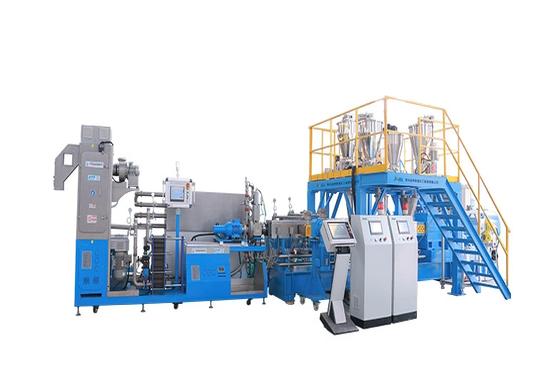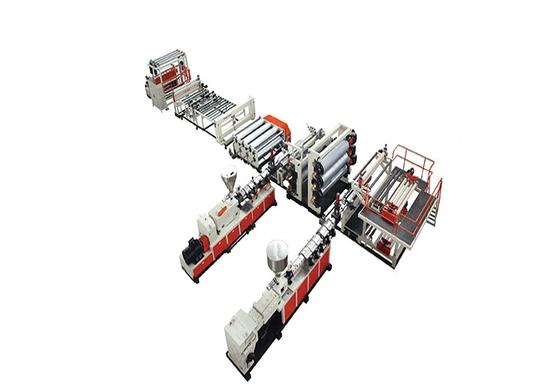
A twin screw extruder is a continuous processing machine designed to melt, mix, disperse, homogenize, and compound polymer materials. Compared with conventional extrusion equipment, twin screw systems provide superior mixing efficiency and process flexibility, making them the preferred choice for modern plastic compounding.
This guide explains how twin screw extrusion works, compares different machine types, and provides practical advice for choosing the best extrusion solution for your production line.
Types of Twin Screw Extruders
Different production requirements require different screw configurations. The two most common types are co-rotating twin screw extruders and counter-rotating twin screw extruders.
Co-Rotating Twin Screw Extruder
The co-rotating twin screw extruder is the most widely used design for plastic compounding. Both screws rotate in the same direction, providing excellent distributive and dispersive mixing.
Typical applications include:
Color masterbatch
Filler masterbatch
Engineering plastics
Bioplastics
Recycling compounds
Advantages include:
Better dispersion
Higher output
Flexible screw combinations
Stable processing
Counter-Rotating Twin Screw Extruder
In this configuration, the screws rotate in opposite directions. Counter-rotating extruders are commonly used for rigid PVC applications where pressure generation and lower shear are required.
Counter-rotating extruders are commonly used for:
PVC pipe
PVC profiles
PVC sheets
Rigid PVC products
They provide excellent pressure generation while maintaining lower shear, making them suitable for heat-sensitive materials.
Key Factors to Consider Before Purchasing
Choosing the right twin screw extruder requires more than comparing machine specifications. Manufacturers should evaluate the material, formula, output requirement, and long-term production plan before selecting the final extrusion system.
Polymer type, such as PE, PP, PET, PA, TPU, PLA, and other materials
Production capacity, usually measured by kg/h
Filler or additive loading ratio
Required mixing and dispersion performance
Pelletizing method
Future product expansion plans
These factors directly influence screw design, barrel configuration, motor power, feeding system, degassing design, pelletizing method, and overall production efficiency.
Applications of Twin Screw Extrusion
One of the most important applications is masterbatch extruder systems, which are widely used to manufacture color masterbatch, filler masterbatch, black masterbatch, white masterbatch, and functional additive compounds.
For manufacturers processing high-loading calcium carbonate formulations, the high filler masterbatch extrusion line delivers excellent dispersion, stable output, and consistent pellet quality.
Common application areas include:
Color masterbatch production
Filler masterbatch production
Black and white masterbatch production
Engineering plastics modification
Glass fiber reinforced compounds
Recycled plastic compounding
Biodegradable plastic compounding
Wire and cable compounds
Functional additive compounds
How Does a Twin Screw Extruder Work?
Twin screw extrusion is a continuous process where raw materials are fed into the extruder, melted under controlled temperature, intensively mixed by specially designed screw elements, and finally discharged through a die for pelletizing or shaping.
A typical production process includes:
Raw Materials
Automatic Feeding
The modular screw design allows manufacturers to customize mixing intensity, residence time, and shear force according to different materials. This flexibility makes twin screw extrusion suitable for both simple formulations and highly engineered plastic compounds.
Why Twin Screw Extrusion Is Preferred?
Compared with traditional extrusion methods, twin screw technology offers several important advantages for compounders that need stable quality, high output, and flexible formula adjustment.
Superior Mixing Performance
The intermeshing screws continuously divide, fold, and redistribute materials, ensuring excellent dispersion of pigments, fillers, fibers, and additives.
Flexible Material Processing
A twin screw extruder can process a wide range of materials, including high-filler formulations, engineering polymers, recycled plastics, and biodegradable resins.
Higher Production Efficiency
Continuous feeding and optimized screw geometry enable higher throughput while maintaining stable product quality.
Better Process Control
Independent temperature zones, modular screw elements, and precise feeding systems allow manufacturers to optimize every stage of production.
Single Screw vs Twin Screw Extruder
Many first-time buyers ask whether a single screw extruder is sufficient. The answer depends on the application. For simple extrusion of uniform polymers, a single screw extruder may be enough. However, for plastic compounding, masterbatch production, or engineering materials, twin screw technology provides far better performance.
| Feature | Single Screw Extruder | Twin Screw Extruder |
|---|---|---|
| Mixing Performance | Moderate | Excellent |
| Dispersion Capability | Limited | Superior |
| High Filler Processing | Limited | Excellent |
| Engineering Plastics | Limited | Excellent |
| Process Flexibility | Low | High |
| Production Stability | Good | Excellent |
| Formula Changes | Difficult | Easy |
How to Choose the Right Twin Screw Extruder
Selecting the right extrusion system requires balancing production capacity, material characteristics, and future expansion plans. Instead of focusing only on machine size, manufacturers should evaluate the complete production requirement.
Production Capacity
Estimate your required hourly output based on current demand and future growth. A machine that is too small may limit production expansion, while an oversized machine may increase investment and energy consumption unnecessarily.
| Production Capacity | Recommended Application |
|---|---|
| 100–300 kg/h | R&D or Small Batch Production |
| 300–800 kg/h | Medium-Scale Manufacturing |
| 800–2000 kg/h | Industrial Production |
| 2000+ kg/h | Large-Scale Continuous Production |
Material Type and Formula
Different polymers and additives require different screw designs, barrel configurations, feeding methods, and temperature control strategies. For example, high filler masterbatch requires strong dispersion and wear-resistant components, while biodegradable materials may need gentler processing and accurate temperature control.
Pelletizing Method
The pelletizing method should match the material characteristics and production target. Common options include strand pelletizing, water-ring pelletizing, underwater pelletizing, and hot-cut pelletizing.
Supplier Experience
Working with an experienced extrusion equipment supplier is important because screw configuration, feeding system, degassing design, and downstream equipment all affect final production performance. JWELL Machinery provides extrusion solutions for masterbatch, engineering plastics, filler compounds, recycled materials, and other plastic compounding applications.
Need a Twin Screw Extrusion Solution?
If you are planning a plastic compounding, masterbatch, or high filler production line, JWELL Machinery can help evaluate your materials, output requirements, and final application to recommend a suitable extrusion system.
Learn more about JWELL’s masterbatch extruder and high filler masterbatch extrusion line.
FAQ
What is a twin screw extruder used for?
A twin screw extruder is used for plastic compounding, masterbatch production, engineering plastics, recycling, biodegradable materials, and specialty polymer processing requiring efficient mixing and dispersion.
Why is a twin screw extruder better than a single screw extruder?
Twin screw extruders provide superior mixing, better dispersion, higher filler loading capacity, and greater process flexibility, making them ideal for complex plastic formulations.
Which industries commonly use twin screw extrusion?
Twin screw extrusion is widely used in masterbatch manufacturing, engineering plastics, wire and cable compounds, recycled plastics, bioplastics, and elastomer compounding.
How do I choose the right twin screw extruder?
Consider the material type, production capacity, formulation, pelletizing method, and future expansion needs. Working with an experienced supplier like JWELL Machinery ensures the equipment is optimized for your application.
Can one twin screw extruder process different materials?
Yes. By changing screw configurations, feeders, and process parameters, one twin screw extruder can process a wide variety of polymers, fillers, pigments, additives, and recycled materials.