Color masterbatch is primarily used to add color and visual consistency to plastic products, while filler masterbatch is designed to reduce production costs and improve certain physical properties by incorporating mineral fillers such as calcium carbonate. Both are produced using a masterbatch extruder, but they differ in formulation, processing requirements, and end-use applications.
Color masterbatch is a concentrated mixture of pigments dispersed in a polymer carrier resin. It is widely used to provide consistent coloration for plastic products while improving processing efficiency compared to direct pigment addition.
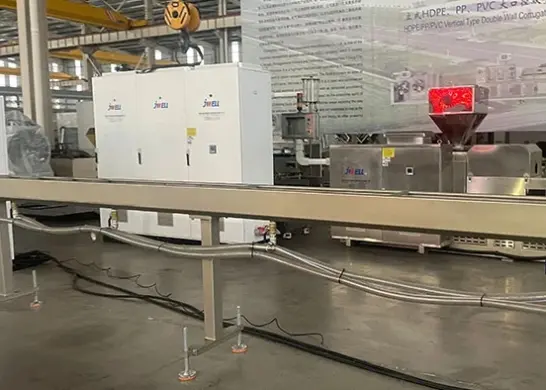
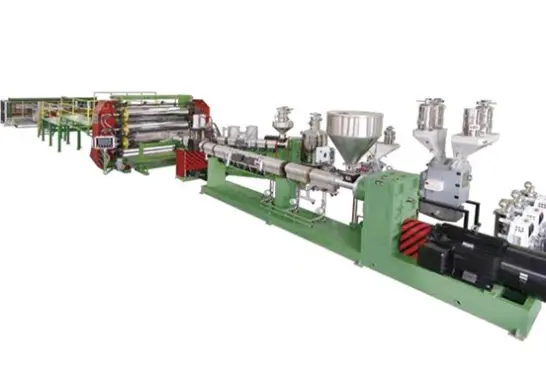
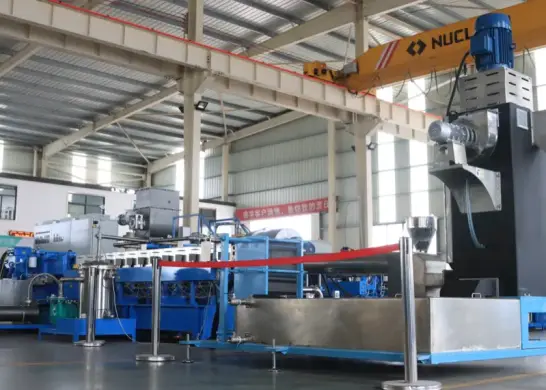
A modern color masterbatch extruder machine ensures that pigments are evenly dispersed throughout the polymer matrix, producing vibrant colors and stable product appearance.
Packaging film
Consumer goods
Household products
Automotive interior parts
Injection molding products
Filler masterbatch is a compound made by blending mineral fillers such as calcium carbonate filler masterbatch extruder, talc, or barium sulfate with a polymer carrier resin.
Unlike color masterbatch, the main purpose of filler masterbatch is not coloring but reducing production costs while improving certain physical properties such as stiffness and dimensional stability.
A professional filler masterbatch extruder machine is designed to process high filler loading formulations while maintaining stable extrusion performance.
Plastic shopping bags
Packaging film
Agricultural film
Pipes
Plastic sheets
Injection molded products
| Item | Color Masterbatch | Filler Masterbatch |
|---|---|---|
| Main Purpose | Coloring plastics | Reducing material cost |
| Main Ingredients | Pigments + Carrier Resin | CaCO₃/Talc + Carrier Resin |
| Loading Ratio | 5%-20% | 30%-90% |
| Key Performance | Color consistency | Cost reduction & stiffness |
| Typical Equipment | Color Masterbatch Extruder Machine | Filler Masterbatch Extruder Machine |
| End Products | Film, packaging, consumer goods | Bags, sheets, pipes, films |
The biggest difference is that color masterbatch focuses on appearance, while filler masterbatch focuses on cost efficiency and material optimization.
Compared with direct pigment dosing, color masterbatch offers several important benefits:
Pigments are pre-dispersed in the carrier resin, resulting in more uniform coloration.
Unlike pigment powders, masterbatch pellets generate less dust during processing.
Granule-based masterbatch is easier to transport, store, and feed into plastic processing equipment.
Consistent color distribution reduces streaks, spots, and color variation.
Filler masterbatch has become increasingly popular because it helps manufacturers optimize production costs while maintaining product quality.
High levels of calcium carbonate can partially replace expensive polymer resins.
Mineral fillers increase rigidity and dimensional stability.
Filler masterbatch can improve processing stability in film, sheet, and pipe production.
Reducing virgin polymer consumption supports more sustainable plastic manufacturing.
There is no universal answer because color masterbatch and filler masterbatch solve different manufacturing challenges.
Product appearance is critical
Brand color consistency is required
Premium packaging is involved
Visual quality affects purchasing decisions
Material cost reduction is important
Large-volume production is required
Mechanical stiffness is needed
Product appearance is less critical
Many manufacturers combine both color and filler masterbatch in the same formulation to balance cost, appearance, and performance.
Both products follow a similar masterbatch manufacturing process involving:
Raw Material Preparation
Premixing
Twin Screw Masterbatch Extrusion
Pelletizing
Cooling and Packaging
A high-performance masterbatch extruder is essential for achieving consistent dispersion, stable output, and uniform pellet quality.
As a professional extrusion equipment manufacturer, JWELL Machinery provides:
Filler Masterbatch Extruder Machine
Twin Screw Masterbatch Extruder
Additive Masterbatch Production Line
Complete Masterbatch Production Solutions
With extensive experience in plastic compounding technology, JWELL Machinery helps customers achieve higher output, better dispersion, and lower production costs.
Filler masterbatch is generally more cost-effective because it can partially replace expensive virgin polymers with lower-cost mineral fillers. Color masterbatch focuses on appearance and color consistency rather than material cost reduction.
Yes. Many plastic manufacturers use both color masterbatch and filler masterbatch in the same formulation. This allows them to achieve the desired color while reducing raw material costs and improving product performance.
A filler masterbatch extruder machine generally includes side feeders, high-torque gearboxes, twin screw extrusion systems, and pelletizing equipment designed to process high levels of calcium carbonate or other mineral fillers.
Yes. A modern masterbatch production line can be configured to manufacture color masterbatch, filler masterbatch, and products from an additive masterbatch production line by adjusting formulations, screw configurations, feeding systems, and processing parameters.